

🇬🇷Athens Travel Guide 2026: The Best Hour for the Acropolis, Ticket Prices, and Getting In from the Airport
Acropolis €30, Acropolis Museum €20, Ancient Agora €20 — Athens charges site by site. Opening hours, the hour that beats the crowds, transport fares, three ways in from the airport, plus Cape Sounion and Meteora.
2026-08-13
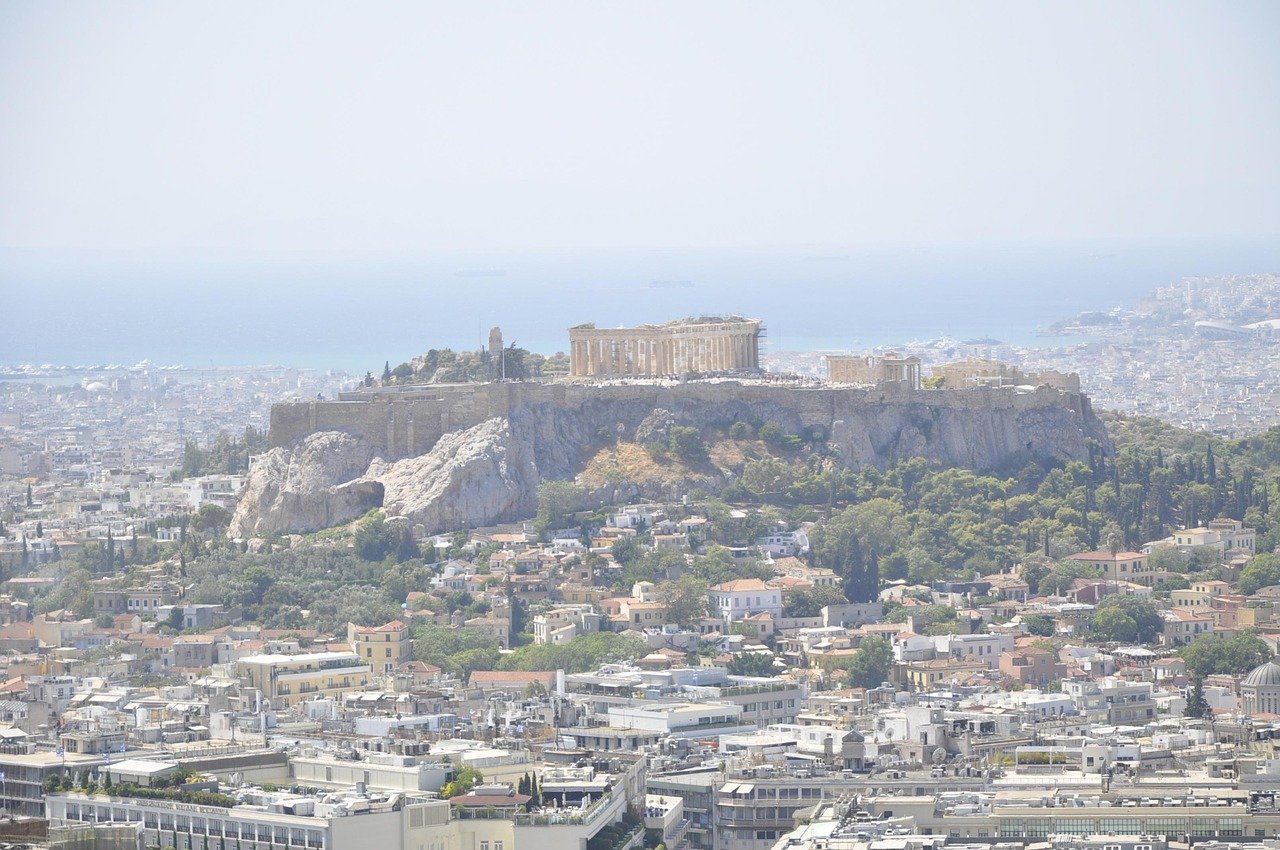
Athens is one of the few European capitals where the core sights are all within walking distance of each other — the Acropolis, the Ancient Agora, Hadrian's Library and the Temple of Olympian Zeus are minutes apart on foot. There are really only two decisions worth making in advance: when to climb the Acropolis, and whether to buy the combined ticket.
How many days
2 days — what most people actually have:
- Day 1: Acropolis at opening → Acropolis Museum → Plaka and the Ancient Agora in the afternoon → Lycabettus Hill for sunset
- Day 2: Changing of the Guard at Syntagma → Temple of Olympian Zeus and Hadrian's Arch → Panathenaic Stadium → Central Market and the city centre
3 days: add Cape Sounion for sunset at the Temple of Poseidon — an easy half-day round trip.
4-5 days: add Meteora, or take a ferry to one island from the port of Piraeus.
The Acropolis: timing and entry
Admission €30. The Acropolis Museum is a separate ticket.
Hours: opens at 8am. Closing is around 8pm in summer and 5pm in winter, with seasonal adjustments — check the official site for the day you're going.
When it's emptiest:
- Be there when it opens at 8am. It is the best hour of the day, by a wide margin. Cruise groups and coach tours generally arrive after 10am, so the 8-9am window is remarkably quiet.
- Second best is the last two hours before closing, when the crowds thin out and the light is good.
- The worst window is 10am to 2pm, especially in summer — there is almost no shade on the summit and the marble reflects the heat.
Practical notes:
- The rock has been polished slick by a century of visitors. Wear flat shoes with grip — sandals and smooth-soled shoes both slip.
- Bring water and a hat in summer. There are no shops on the hill.
- There are two entrances. The main west gate has the longest queue; the south entrance near the Acropolis Museum is usually much faster.
- Free admission on the first Sunday of each month from November through March — but expect it to be very busy.
What everything costs
Athens charges per site, and the prices vary a lot:
| Site | Price | Notes |
|---|---|---|
| Acropolis | €30 | Includes the Parthenon, Erechtheion and the rest of the summit |
| Acropolis Museum | €20 | Half price under 25, free under 5 |
| Ancient Agora | €20 | Includes the Temple of Hephaestus |
| Temple of Olympian Zeus | €20 | Next to Hadrian's Arch |
| Hadrian's Library | €10 | Near Monastiraki |
| Roman Agora | €10 | Includes the Tower of the Winds |
| Panathenaic Stadium | €12 | Site of the first modern Olympics |
Is the combined ticket worth it? There's an official multi-site pass. The test is simple: if you're only doing the Acropolis and the Acropolis Museum, no — buy them separately. If you'll visit three or more of the Ancient Agora, Temple of Olympian Zeus, Roman Agora and Hadrian's Library, the pass starts to make sense. Add up the face values for your actual list.
Important: the Acropolis Museum is not included in the archaeological sites pass under any circumstances.
Acropolis tickets and guided tours
GetYourGuide · from From €30
Book a timed slot ahead in high season — the 8am entry goes first
This is an affiliate link — we may earn a commission at no extra cost to you.
The rest of the city
Acropolis Museum — as important as the hill itself. The top-floor Parthenon gallery displays the frieze in its original orientation, with a glass wall looking straight up at the temple. Do the Acropolis first, then the museum; it makes far more sense in that order.
Plaka — the old quarter below the Acropolis: whitewashed walls, bougainvillea, open-air tavernas. Next to it, Anafiotika is a cluster of houses built by Cycladic islanders in the 19th century — it looks like a piece of Santorini dropped into the city, and it's far quieter.
Lycabettus Hill — the highest point in the city, with views over Athens to the sea. Funicular €10 one way, €13 return, or walk up in about 30 minutes on a steep path. Go an hour before sunset.
Syntagma Square — for the Changing of the Guard by the Evzones, in their distinctive uniform and ceremonial step. On the hour, with the full ceremonial version on Sunday mornings.
Panathenaic Stadium — the all-marble venue of the 1896 Olympics. 8am-7pm March to October, 8am-5pm November to February.
Central Market (Varvakios) — butchers and fishmongers packed together; the most alive part of the city and a good lunch stop.
Two trips out of the city
Cape Sounion — sunset at the Temple of Poseidon
About 72km from Athens, roughly 1.5 hours each way. The temple stands on a clifftop above the sea, and at sunset the white columns turn gold. It's one of the most famous sunsets in Greece.
- Temple admission €20
- Intercity buses run from central Athens, about €12.50 return
- Afternoon sunset tours are an alternative if you'd rather not wait for buses
- Check the last bus time before you go — it's easy to miss it after sunset
Meteora — monasteries on the rocks
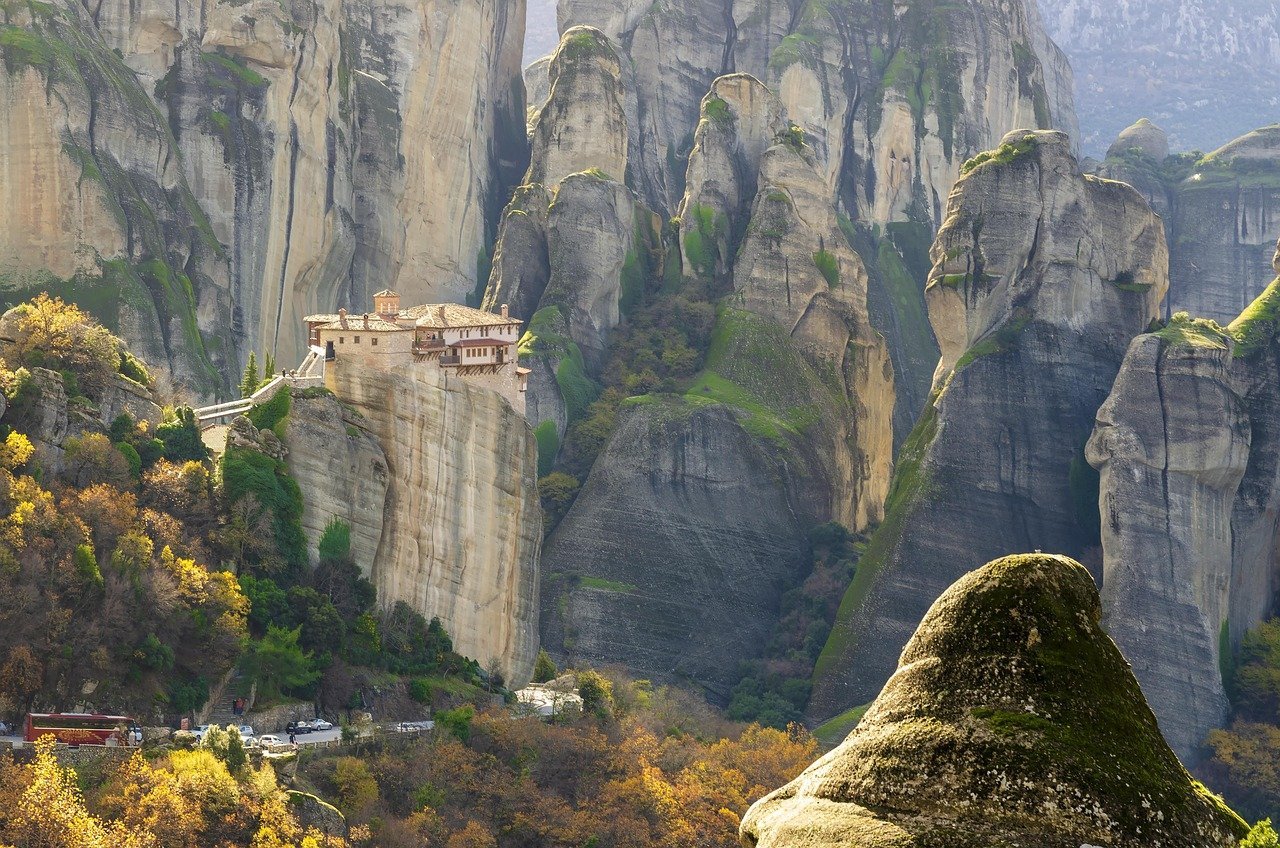
About 265km from Athens; roughly 5 hours by train to Kalambaka, the nearest town. Eastern Orthodox monasteries perched on natural sandstone pillars — after the Acropolis, the most extraordinary thing to see in Greece.
- Stay overnight in Kalambaka. Doing it as a day trip means 10 hours on trains, which isn't worth it.
- There's a dress code: women need a skirt below the knee to enter (wrap skirts are lent at the entrance); shorts and sleeveless tops are not allowed for anyone.
- Each of the six monasteries has its own closing day — check which are open before you travel.
- The light is best at dawn and sunset, which you'll only catch if you stay the night.
From the airport
Athens International (ATH) is about 40km from the centre. Three options:
X95 bus — €5.50, about 60 minutes to Syntagma Square, running 24 hours. Fine with luggage, and the best value of the three.
Metro Line 3 (blue) — €9 one way, €16 return, about 40 minutes to the centre. Departures are less frequent on the airport section than in town, so check times.
Taxi — flat €40 to the centre, €55 between midnight and 5am. Split three or four ways, that's competitive with the metro.
Heading to Piraeus for the ferries? The X96 bus runs directly from the airport, or take Metro Line 3 and change to Line 1 (green). If you have an early sailing, stay near the port the night before.
Getting around
The main sights are walkable, but if you need transport:
- Single ticket €1.20, valid for 90 minutes including transfers (metro, bus and tram)
- Day pass €4.10
- 3-day tourist ticket €20, which includes two airport transfers — if you're taking the metro in and out, that's €16 of the €20 right there, making three days of city travel almost free
Validate every time. Inspectors do check, and fines are steep.
Eating
Souvlaki / gyros — €3-5 for meat in a pita, thickest on the ground around Monastiraki.
Moussaka — layered aubergine and spiced meat, the national dish.
Greek salad (horiatiki) — the local version has no lettuce: tomato, cucumber, onion, olives, and a whole slab of feta on top.
One tip: restaurants in Plaka and directly below the Acropolis are noticeably marked up. Walk two blocks north, or head towards the Central Market, and the same dishes cost 30-40% less.
Athens hotels
Booking · from From €70
Plaka, Monastiraki and Koukaki are all walkable to the Acropolis; Koukaki is the best value
This is an affiliate link — we may earn a commission at no extra cost to you.
Where to stay
Plaka — most convenient and most atmospheric, also the most expensive, and noisy at night.
Monastiraki — metro hub, easy to get anywhere, flea market on the doorstep.
Koukaki — a residential neighbourhood on the south side, five minutes' walk from the Acropolis Museum, with restaurants where locals actually eat. The best value of the three.
Areas to avoid: around Omonia Square at night, and parts of Exarcheia. Short-let platforms often show unusually cheap listings in both — if a price looks too good, check the address first.
When to go
April-May and September-October are ideal: comfortable temperatures, fewer people than midsummer, and better light.
June-August: very hot, often 35-40°C, with midday effectively unusable outdoors. The upside is that it's island-hopping season with the densest ferry schedules.
November-March: cool and rainy, the fewest visitors, Acropolis closing at 5pm — but free entry on the first Sunday of each month.
FAQ
Is Athens safe?
Broadly yes, with little violent crime. The main risk is pickpocketing on the metro and around Syntagma and Monastiraki, plus the area around Omonia Square after dark. Normal precautions are enough: bag in front, phone not in an outside pocket. The Europe-wide emergency number is 112.
How many days do I need?
Two days covers the city. Three with Cape Sounion. Four or five if you're adding Meteora or an island.
Does Greece use the euro?
Yes. Cards are widely accepted, but small tavernas, market stalls and rural areas still run largely on cash — carry some.
What are the entry requirements?
Greece is in the Schengen Area. US, Canadian, UK, Australian and most other visa-exempt passport holders enter without a visa but are subject to the 90/180 rule — see Visa-Free Entry to the Schengen Area.
Can I take a backpack up the Acropolis?
Large backpacks and suitcases aren't allowed on the hill; there's storage at the entrance. Small bags and water bottles are fine.
Compiled from the Greek Ministry of Culture, Athens transport authority publications and public guide sources. Prices and hours change seasonally — check the official sites for the day you're visiting.