

🇮🇹Uffizi Gallery Guide: Tickets, the Early-Bird Slot and What Not to Miss
Botticelli's Birth of Venus and Primavera, plus Leonardo, Michelangelo, Raphael and Titian. Ticket prices with the booking fee included, ten masterpieces in the order you'll walk past them, and whether the 8:15 slot is worth the early start.
2026-09-05
The Uffizi is the most important gallery in Italy. It was built between 1560 and 1580 as government offices — uffizi literally means "offices" — and became a gallery when the Medici opened their collection to visitors. The two paintings everyone comes for are Botticelli's Birth of Venus and Primavera, but the holdings run through Leonardo, Michelangelo, Raphael, Titian and Caravaggio.
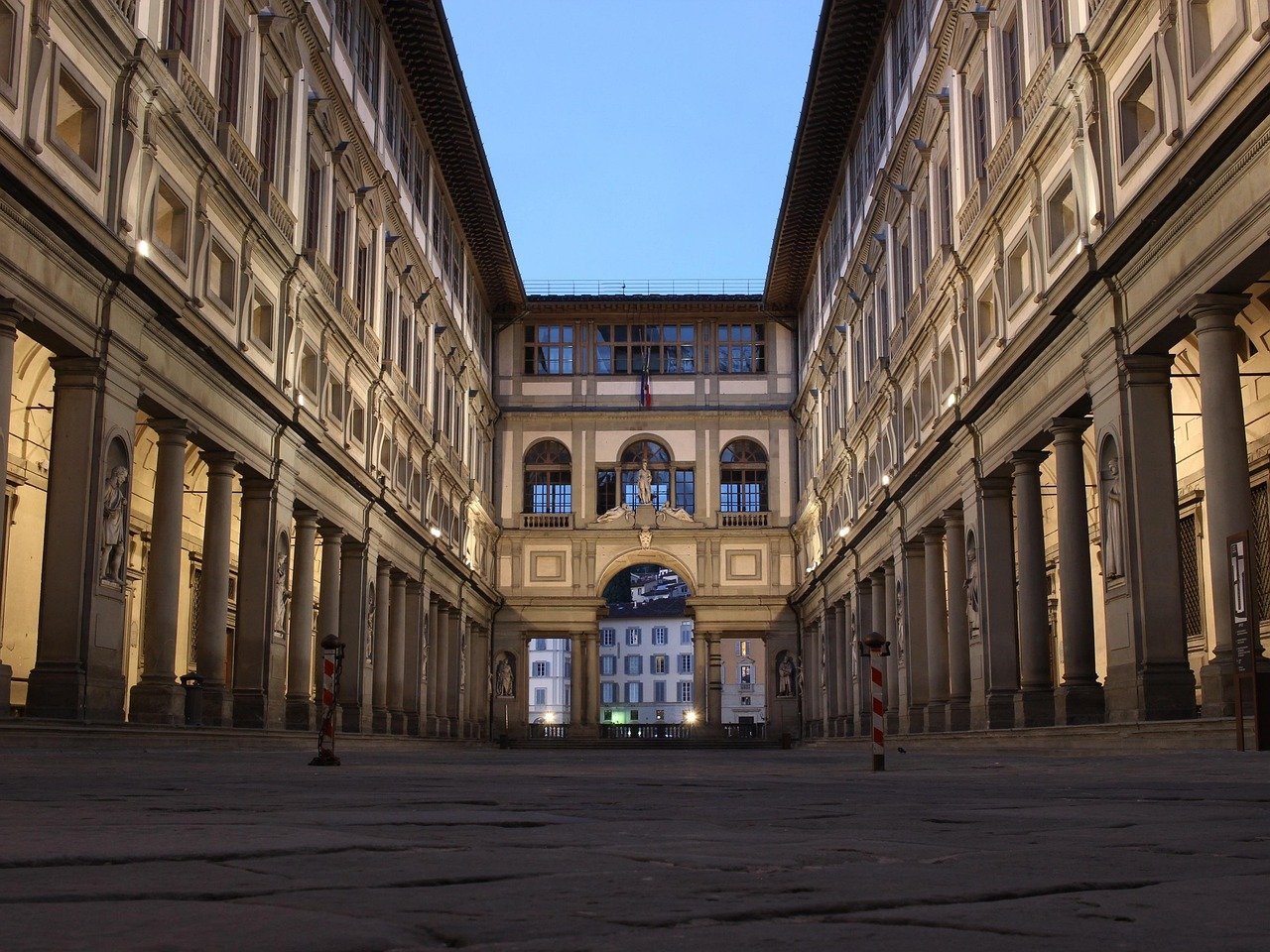
Visitor information
Standard ticket: €25, plus a €4 booking fee on the official site — €29 in practice. Free for under-18s.
Early-bird ticket: entry at 8:15 or 8:30 for €19, again plus the €4 fee, so €23.
Free days: the first Sunday of each month, plus 25 April, 2 June and 4 November. You can't reserve on free days — it's the queue only, though pregnant visitors and visitors with disabilities skip it.
Opening hours: Tuesday–Sunday 8:15–18:30. Closed Mondays, 25 December and 1 January.
Time needed: two hours as a baseline. If you care about Renaissance painting, three to four.
Uffizi Gallery timed-entry ticket
GetYourGuide · from $32
4.2 from 7,184 reviews. Covers all collections and temporary exhibitions, with a multilingual audio app. Collect your ticket from the yellow-vested staff by the Cellini statue 15 minutes before your slot — you don't go straight to the door. Non-refundable
This is an affiliate link — we may earn a commission at no extra cost to you.
Ten masterpieces, in walking order
The Uffizi is hung chronologically, starting with 13th-century altarpieces on the second floor and ending with the 17th century on the first. So the order below is also the order you'll physically walk past them — no doubling back.
A warning about room numbers: the Uffizi has been renovating in phases for years, and rooms are renumbered and paintings moved with little notice (the Botticelli hall has already been relocated once during works). Nothing below gives a room number on purpose. Pick up the free floor plan at the entrance, or follow the artist names on the doorframes.
Second floor — where the Renaissance starts
Giotto, Ognissanti Madonna
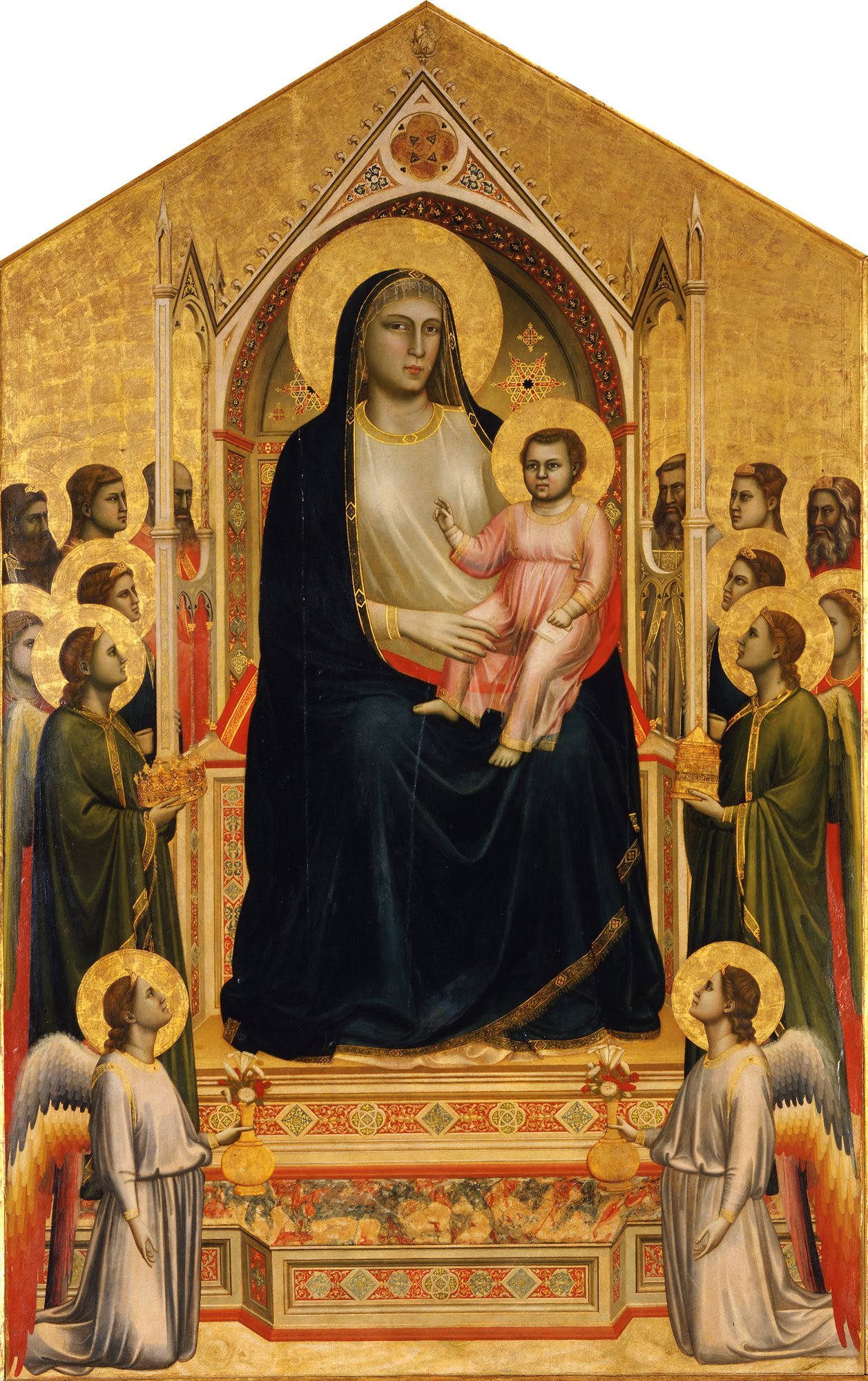
It's in the very first room. Hanging alongside it are Cimabue's and Duccio's versions of the same subject — three altarpieces, same theme, side by side. This is the single most instructive room in the gallery, because you can see painting move from flat Byzantine icon to figures with actual volume in the space of three canvases. Most people stride through it hunting for Botticelli. They're missing the best lesson in the building.
Piero della Francesca, Portraits of the Duke and Duchess of Urbino
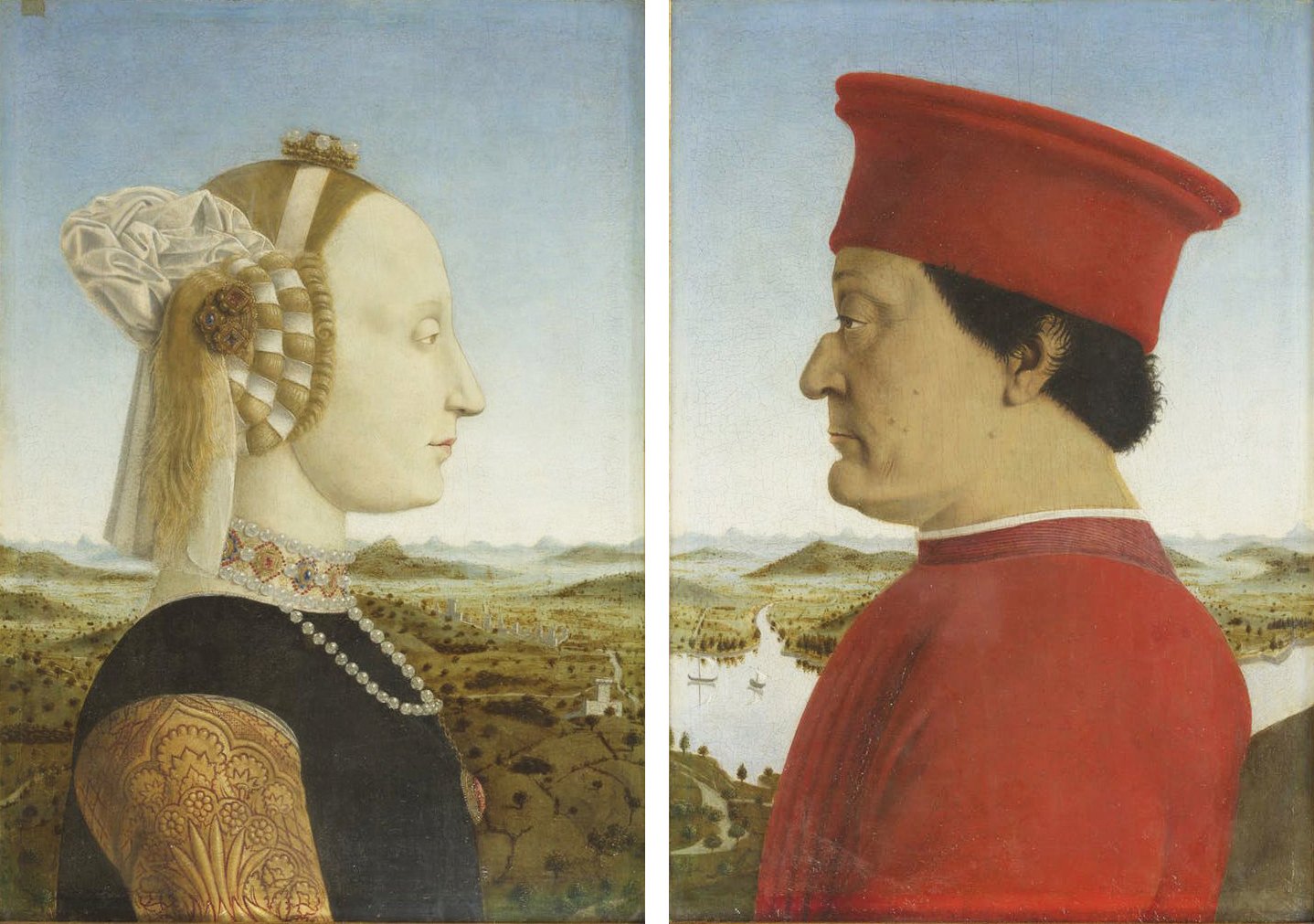
A pair of strict profile portraits. Duke Montefeltro is shown from the right only, because he lost his left eye in a tournament and broke his nose in the same accident — one of the earliest instances in Western painting of showing a defect rather than hiding it.
Second floor — the Botticelli room (the most crowded space in the gallery)
Botticelli, The Birth of Venus
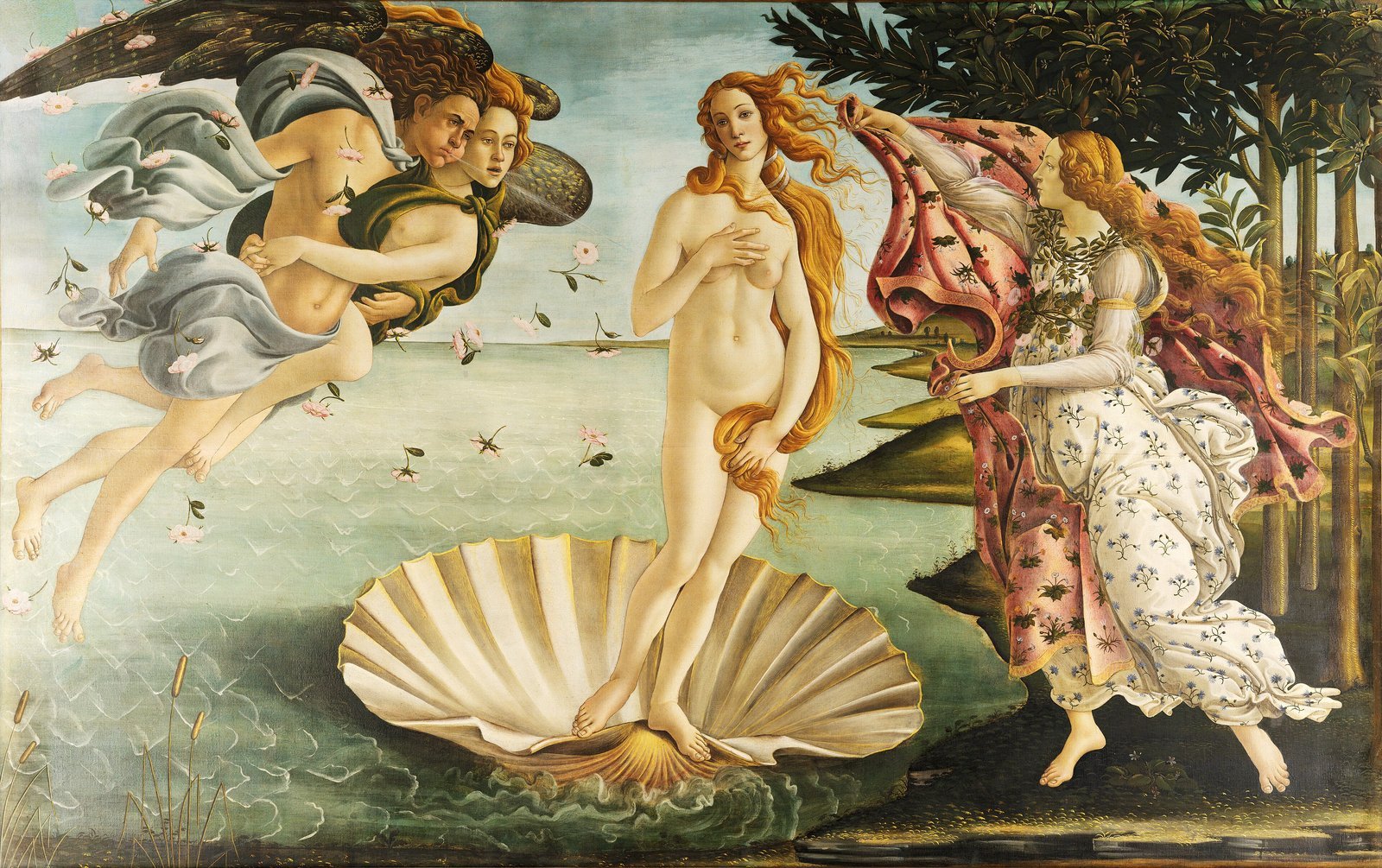
Around 1485, painted on canvas rather than the wood panel that was standard at the time — an unusual choice. Venus arrives on a shell, blown ashore by Zephyr on the left, a Hora waiting with a cloak on the right.
One detail to look for: her weight isn't actually balanced, and her neck is too long. Botticelli wasn't after anatomical accuracy; he was after the line. That's precisely where he parts company with the realists of his own generation.
Botticelli, Primavera
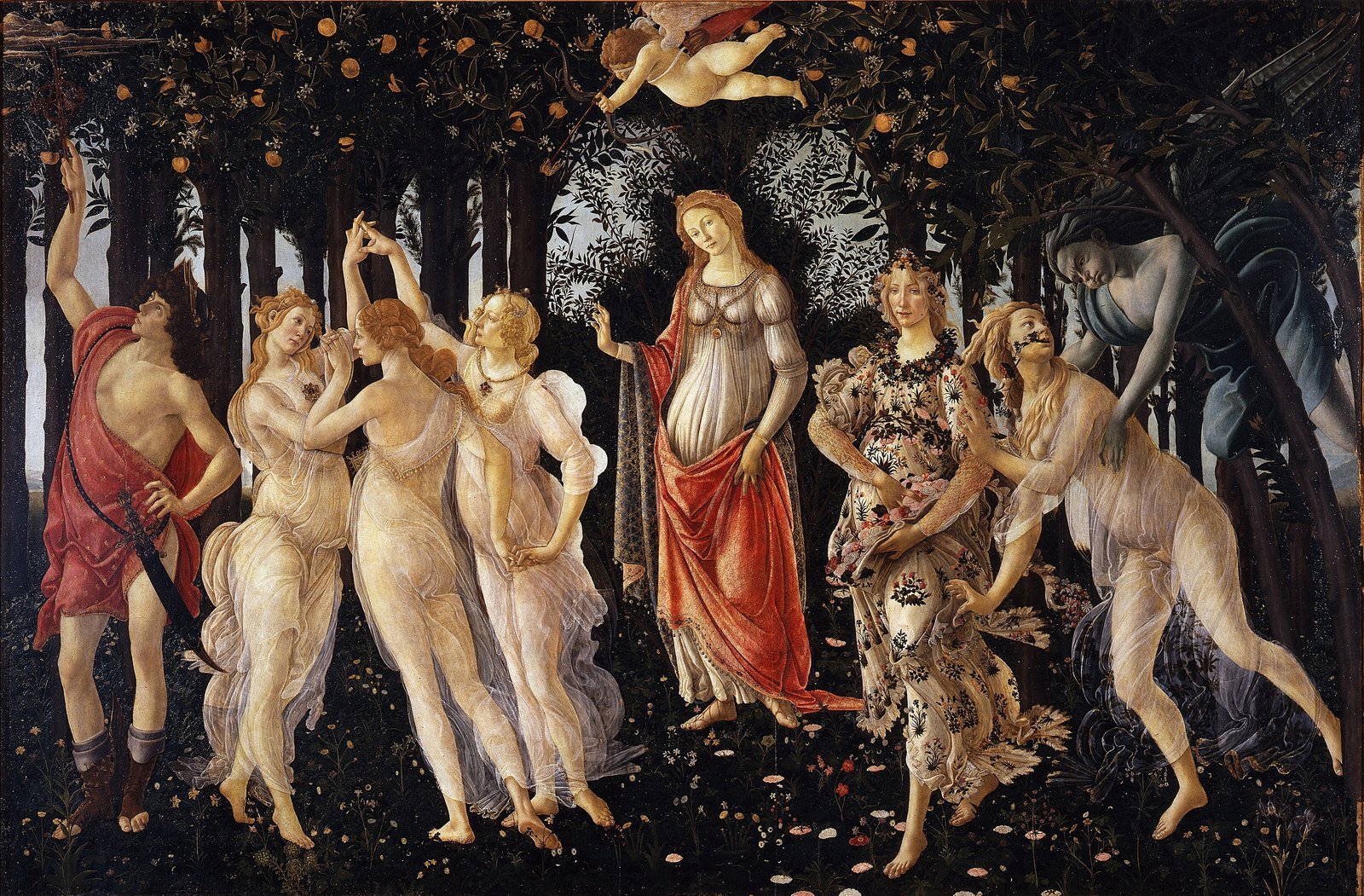
Same room, usually hung facing the Birth of Venus. The painting contains over 190 identifiable plants, roughly 130 of which can be matched to a specific species — and most of them genuinely flower in a Florentine spring. It doubles as a fifteenth-century botanical survey.
What it actually depicts has been argued over for centuries without resolution. Don't feel obliged to "get it". Read the figures right to left once and move on.
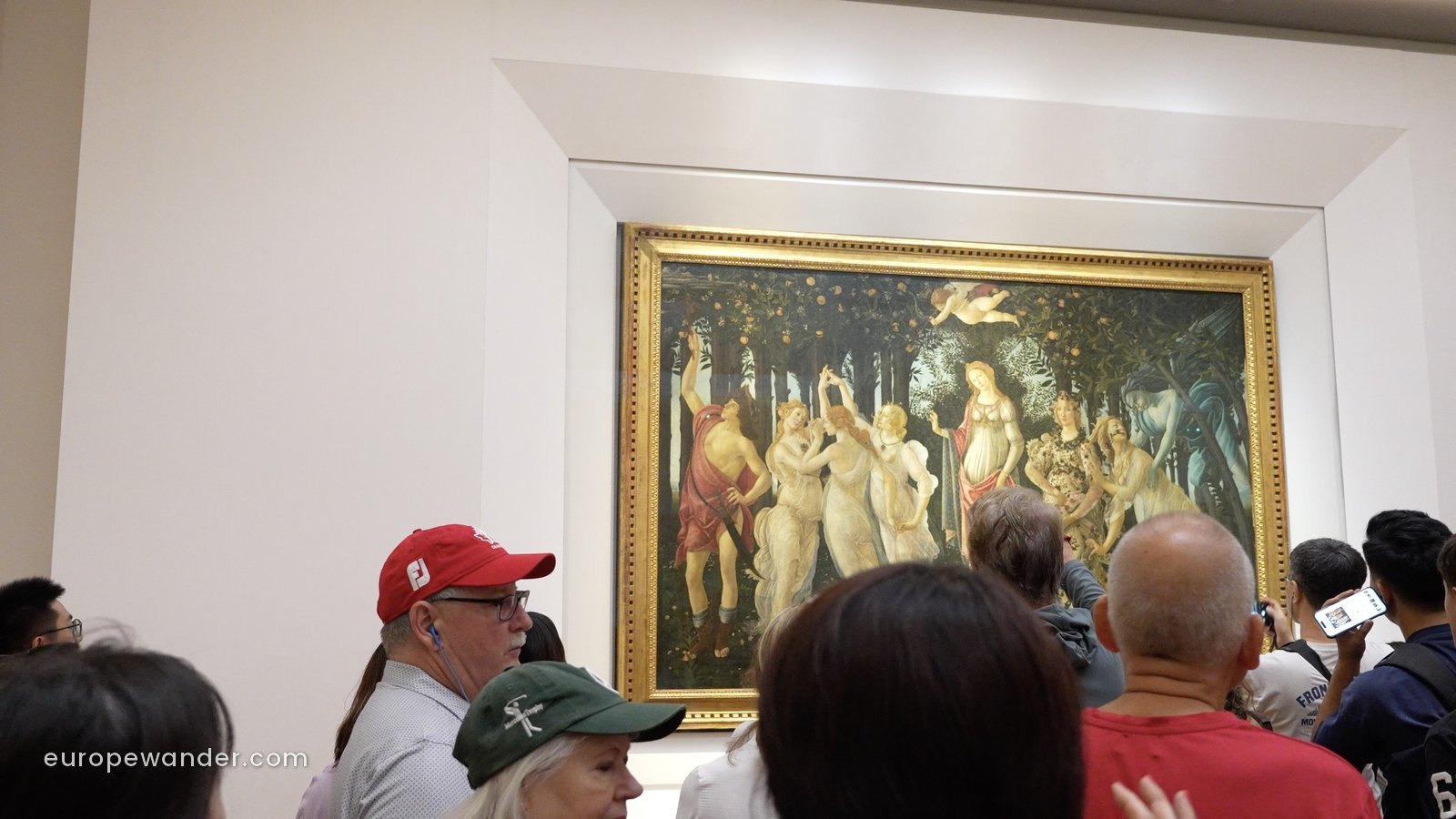
The practical note for this room: it is the most crowded room in the building, by a wide margin. Nearly the entire value of the early-bird ticket is realised here — walk straight to it at 8:15 and you get ten or fifteen quiet minutes. After ten in the morning you're looking over heads.
Second floor — Leonardo and Michelangelo
Leonardo, Annunciation
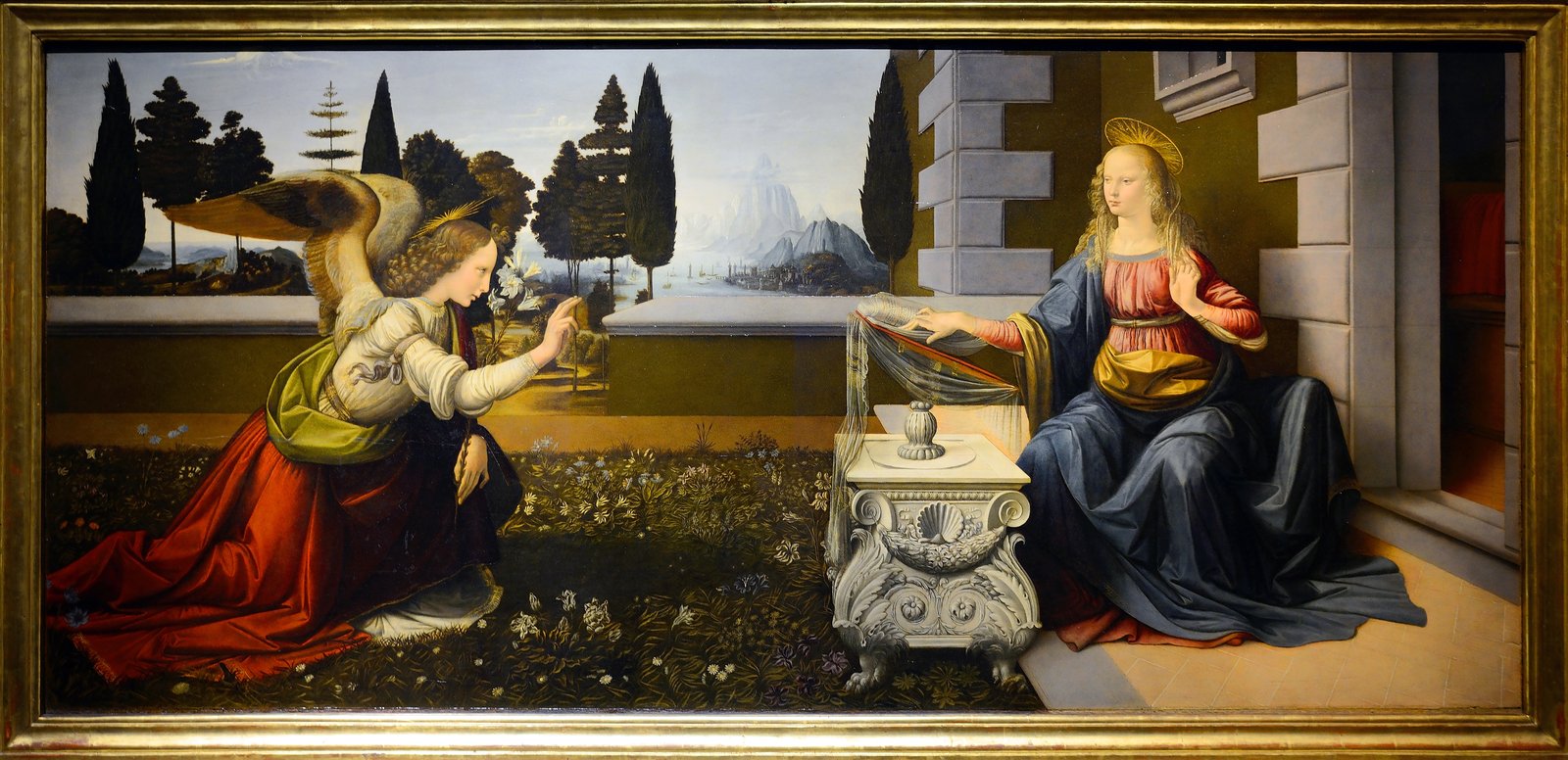
An early work, painted in his early twenties while he was still in Verrocchio's workshop. Stand at the lower right and look at it on the diagonal — the perspective was corrected for an oblique viewpoint, which is why the Virgin's right arm looks too long when you face it square on.
His unfinished Adoration of the Magi is in the same area, back on display after its 2017 restoration. The fact that it was never finished is the point: you can see exactly how he laid a picture in.
Michelangelo, Doni Tondo
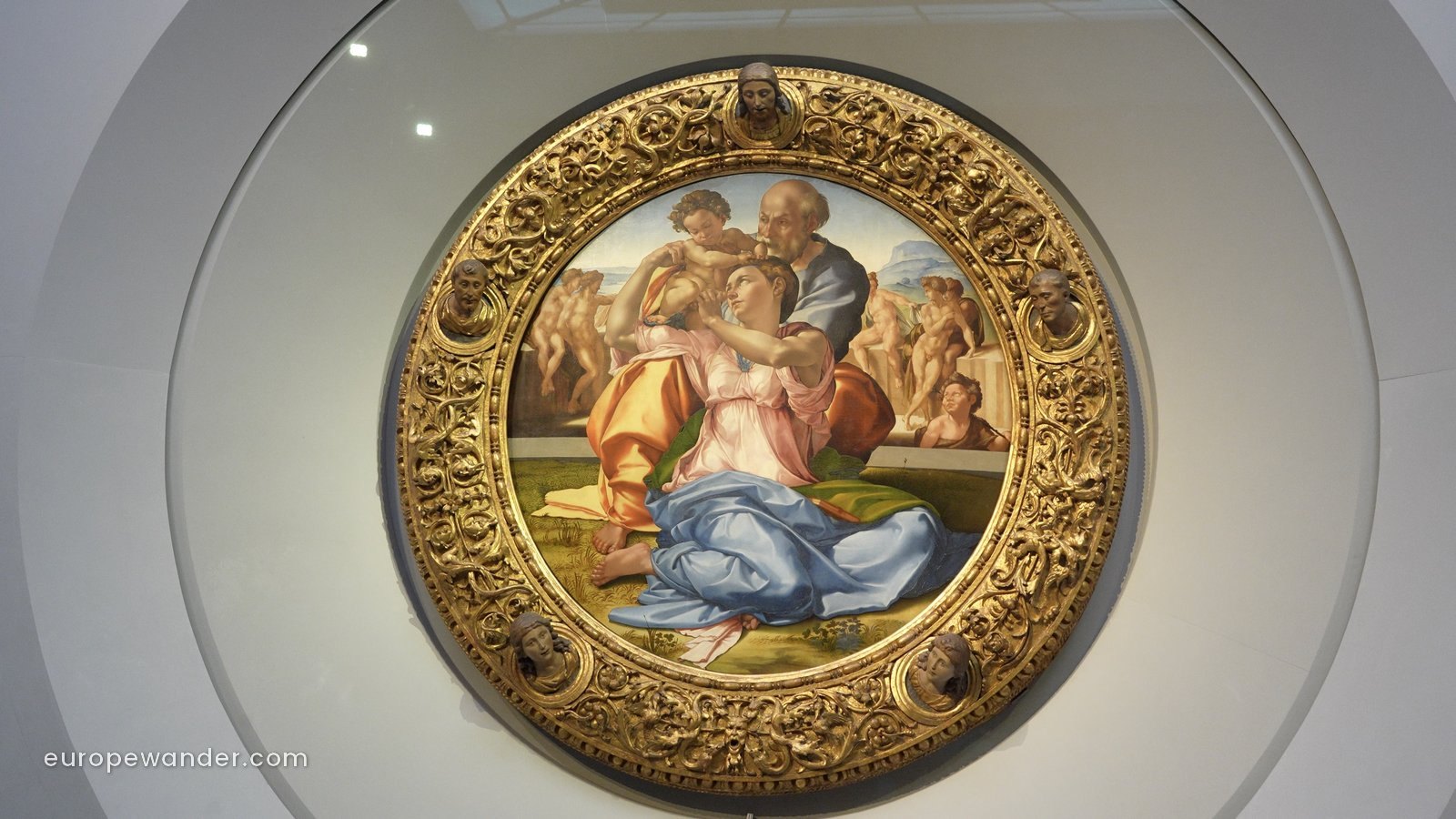
His only securely attributed surviving panel painting, and the only Michelangelo easel painting you can see in Florence. Circular composition, startlingly bright colour, figures twisting like sculpture — he was a sculptor first, and this looks like three marble figures that someone painted.
The frame is original and Michelangelo had a hand in designing it. Don't spend all your attention on the picture.
Raphael, Madonna of the Goldfinch
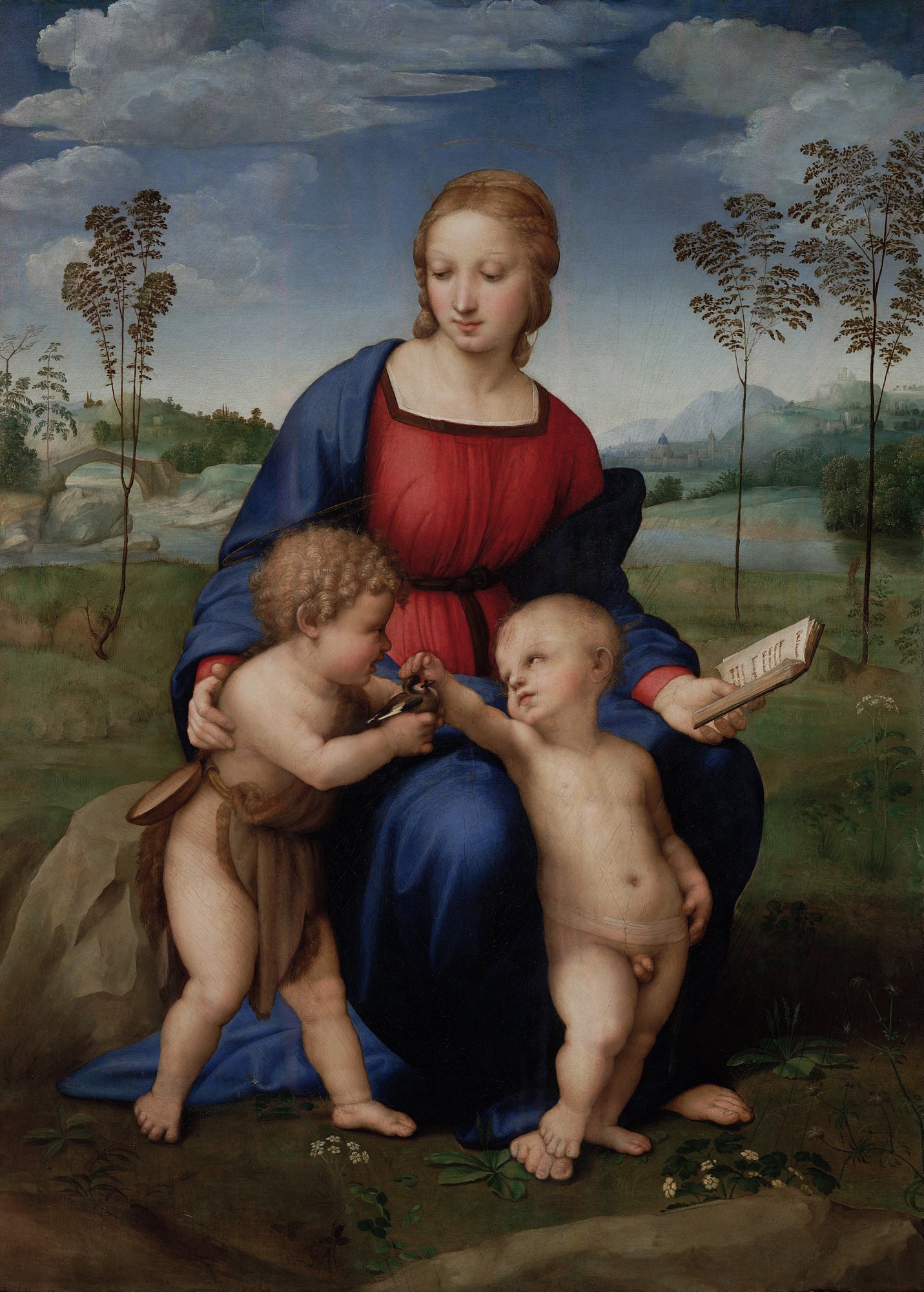
In 1547 the house it hung in collapsed and the panel broke into seventeen pieces. It was reassembled and is back on display — get close and you can still find the joins.
First floor — Titian and Caravaggio
Titian, Venus of Urbino
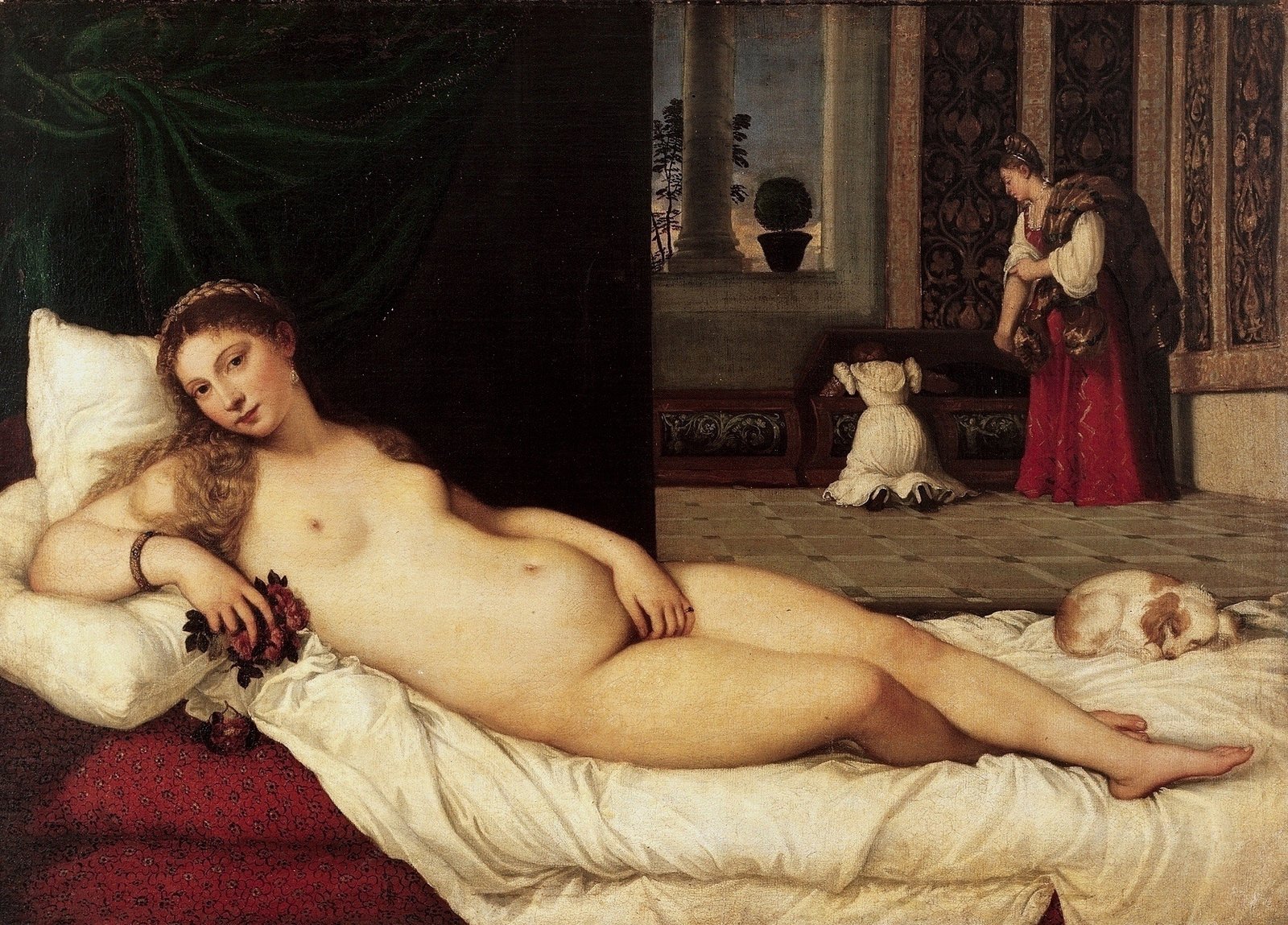
- Manet borrowed and subverted this pose wholesale for Olympia three centuries later — one of the most famous quotations in art history.
Caravaggio, Medusa
Painted on a convex ceremonial shield, so it isn't flat. He put the expression of the instant of decapitation onto a curved surface, and standing directly in front of it produces a distinct sense of the head coming at you. His Bacchus and Sacrifice of Isaac are usually nearby.
Two things that aren't exhibits
The Vasari Corridor window: at the western end of the second floor you can see the entrance to the enclosed passage that runs to the Ponte Vecchio — the private route the Medici used so they never had to walk among ordinary Florentines.
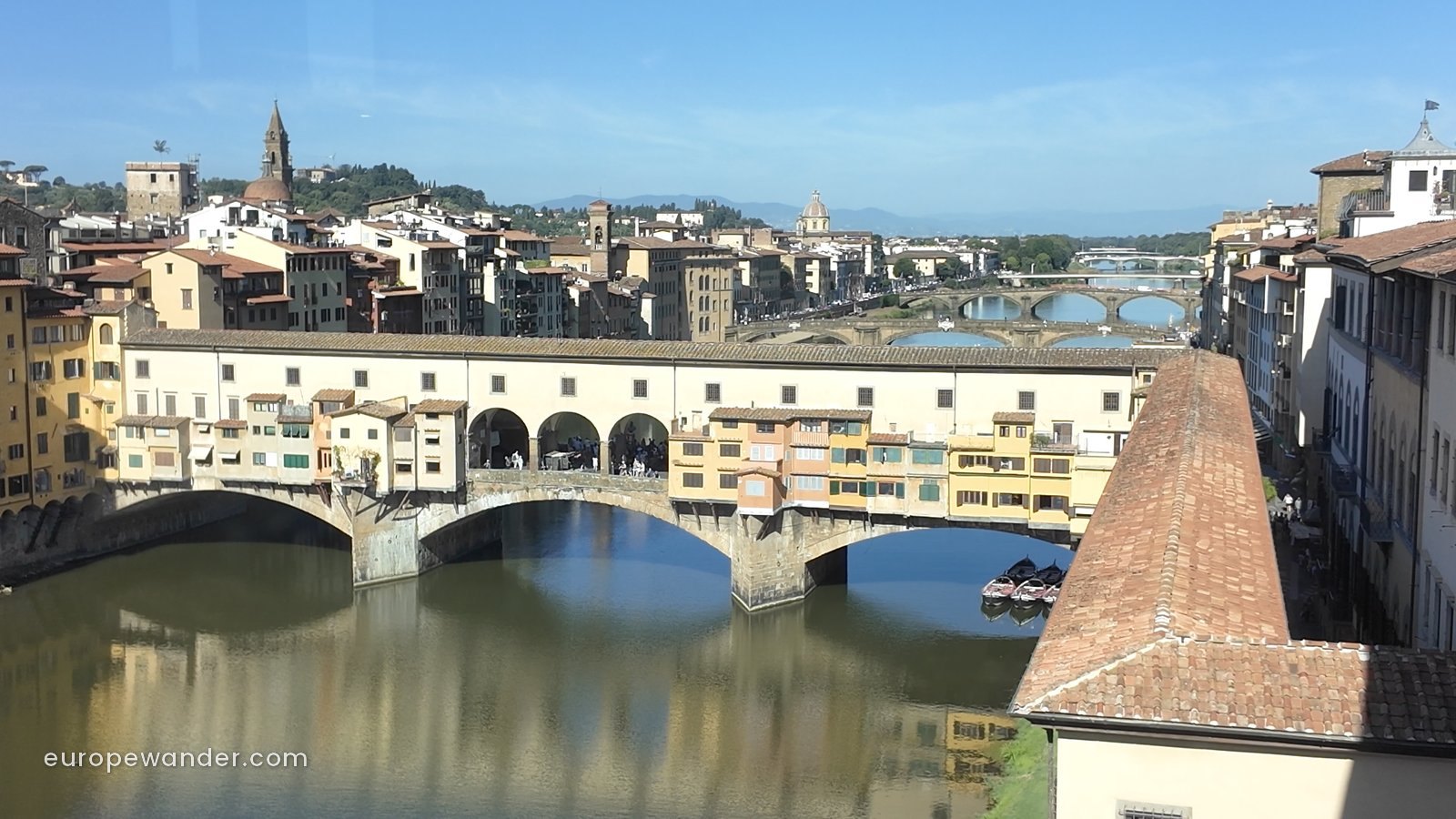
The window at the end of the corridor: it looks straight down the Arno at the Ponte Vecchio, it's the best photograph in the building, and there is essentially never a queue for it — everyone else is inside looking at paintings.
If you're short on time
One hour: the Botticelli room, Leonardo's Annunciation, Michelangelo's Doni Tondo, then one look at the Ponte Vecchio from the corridor and out.
Two hours (most people): add the Giotto room, the Piero diptych and the Titian.
Three hours or more: carry on to Caravaggio and the Dutch painters on the first floor.
Is the early-bird slot worth it?
It saves €6 and, more importantly, it puts you in the Botticelli room before the tour groups arrive. At 8:15 you can stand in front of the Birth of Venus with a handful of other people; by 11:00 you're looking at it over shoulders.
The trade-off is obvious — you have to be at the door at 8:15, which is a real ask if you spent the previous evening eating your way around the Duomo. Decide the night before, not the morning of.
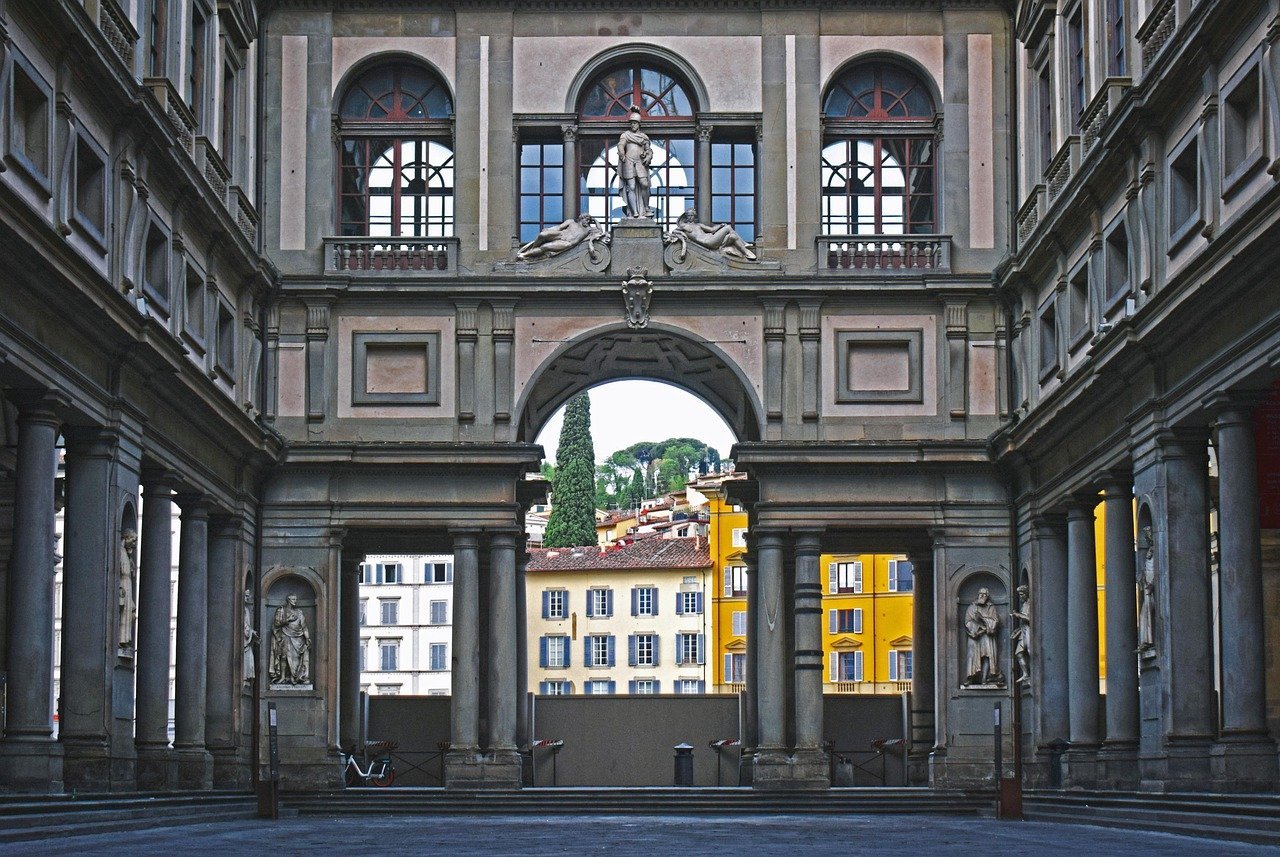
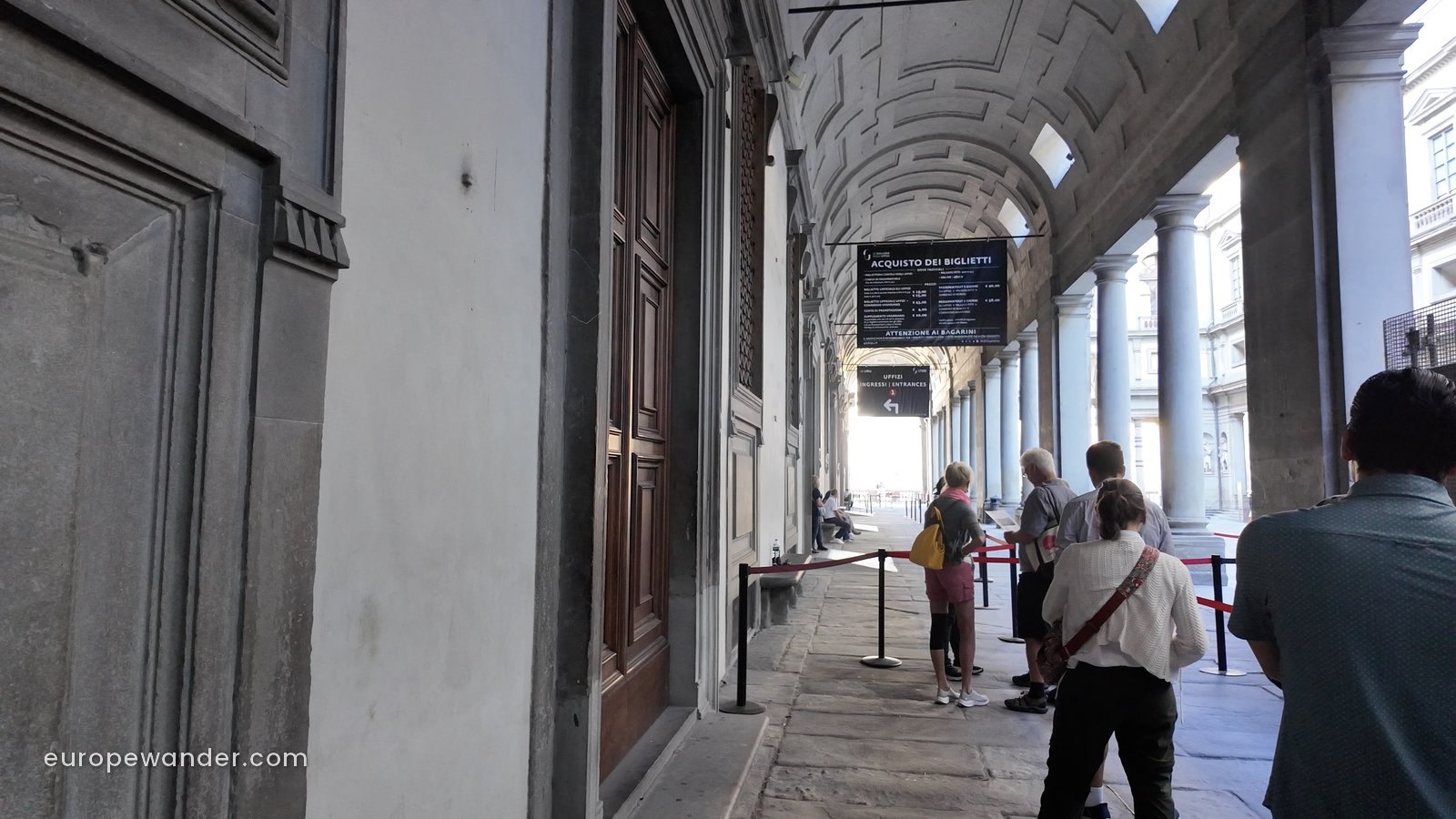
Afterwards: the sandwich queue
In the small street behind the gallery is All'antico Vinaio, one of Florence's most famous panini shops. There will be a line. It moves fast, the sandwiches are enormous, and it's a very good use of the hour after three hours of Renaissance painting.
How to schedule it
The Uffizi normally goes on Day 2 of a two-day Florence stay, in the morning, with Piazza della Signoria, the Ponte Vecchio and sunset at Piazzale Michelangelo in the afternoon.
The reason to split it from the Duomo complex — which takes Day 1 — is simple stamina. Two major sites in one day is more Renaissance than most people can absorb, and you'll enjoy both less.
Back to the Florence travel guide for the full two days.