

🇫🇷Arc de Triomphe Guide 2026: 284 Steps, Ticket Prices and the Champs-Élysées Walk
Is the climb worth it, who actually gets to use the lift, and how much cheaper is winter? Plus how to chain the Arc with the Champs-Élysées depending on whether you're shopping.
2026-08-22
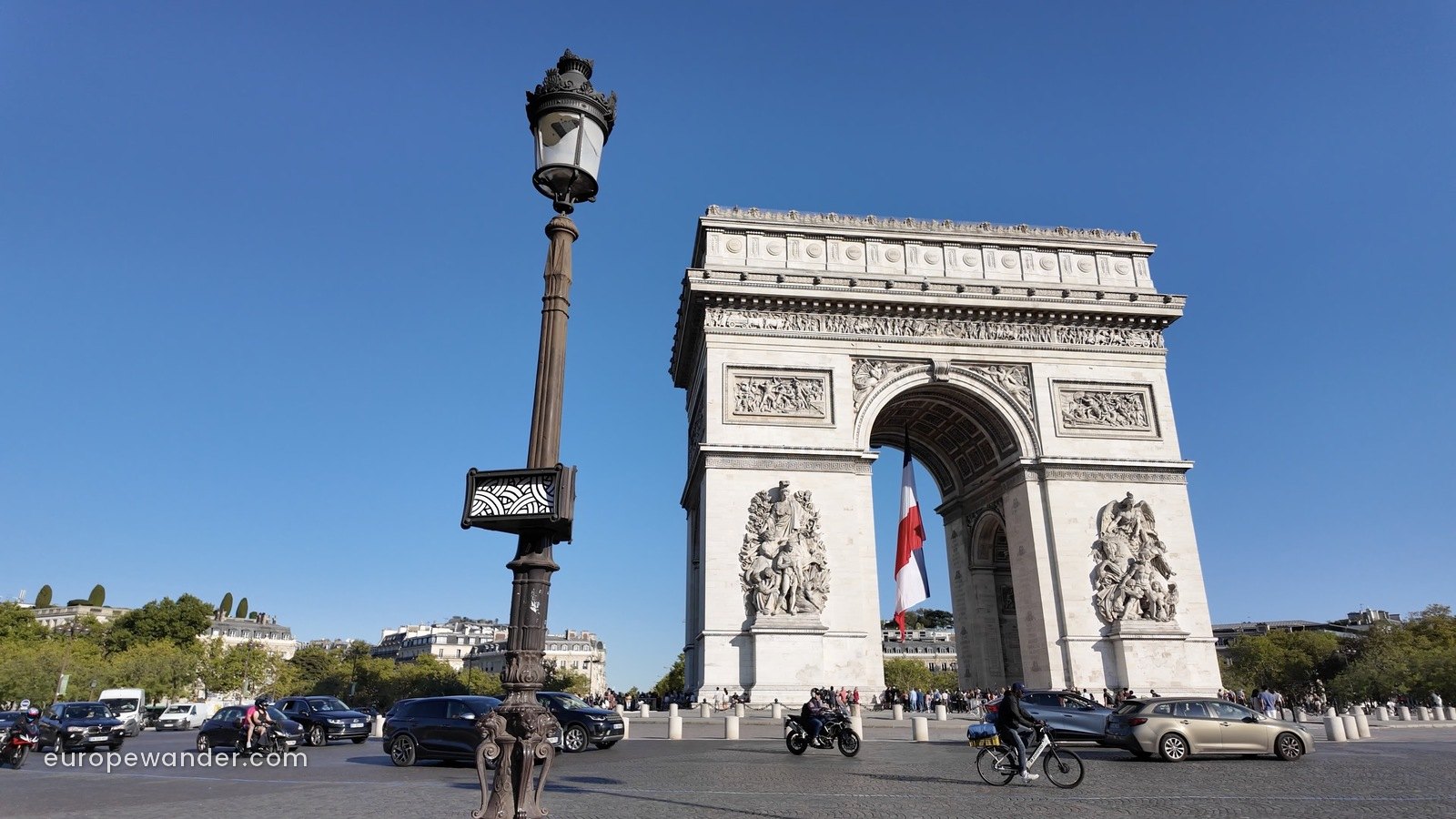
The Arc de Triomphe — full name Arc de Triomphe de l'Étoile — is 49.54 m high and 44.82 m wide, standing at the centre of Place Charles de Gaulle with twelve avenues radiating out from it, the most famous being the Champs-Élysées. Napoleon ordered it in 1806 to mark his victory over the Russian-Austrian armies the year before; work stopped when he fell, and it wasn't finished until 1836.
Tickets and the climb
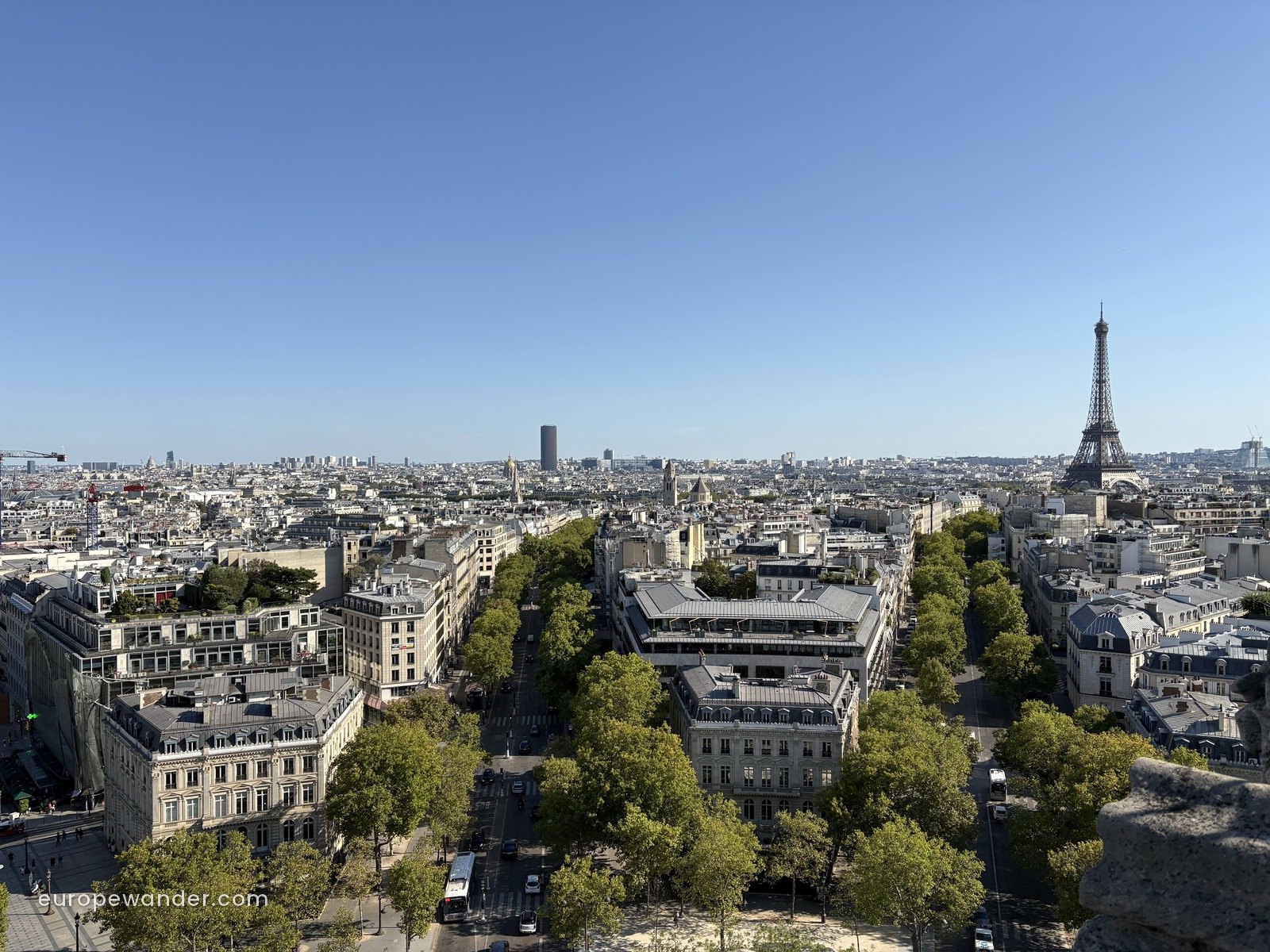
Getting to the top means 284 steps up a spiral staircase. Allow two to three hours for the visit, and you get one of the best panoramas in the city.
Prices (2026):
- April–September: €22 adult, €16 on Wednesdays
- October–March: €16 adult
- Free under 18; free for EU residents aged 18–25, including students on a residence permit
- Free on the first Sunday of the month in January, February, March, November and December
Arc de Triomphe skip-the-line rooftop ticket
GetYourGuide · from €22
This is an affiliate link — we may earn a commission at no extra cost to you.
It's included in the Paris Museum Pass, and it needs no advance reservation — one of the few busy Paris sights where the pass alone gets you straight in.
Opening hours
- April–September: 10:00–23:00, Tuesdays from 11:00
- October–March: 10:00–22:30, Tuesdays from 11:00
- Last entry 45 minutes before closing
- Annual closures: 1 May; the mornings of 8 May, 14 July and 11 November; early closing at 16:00 on 24 and 31 December
Questions about the climb
Is there a lift?
The standard route is the 284 steps. The lift is reserved for visitors with reduced mobility, elderly visitors, small children and pregnant women — you tell staff at security and they take you across. Fit young visitors who ask will be turned down. And the lift only reaches the upper hall: there are still 46 more steps to the actual terrace.
Can I bring a tripod?
No.
Do I need a ticket just to look at it from outside?
No. But the Arc is marooned in the middle of a roundabout — use the underpass, never try to cross the traffic.
Chaining it with the Champs-Élysées
The Champs-Élysées runs 2.5 km from Place de la Concorde in the east to the Arc in the west — 30–40 minutes on foot, with several metro stations along the way. The luxury shopping is concentrated in the triangle formed by the Champs-Élysées, Avenue Montaigne and Avenue George V.
- Not shopping: get off at Franklin D. Roosevelt or George V and walk towards the Arc, so the monument is in front of you the whole way. Climb it at the end.
- Shopping: get off at Charles-de-Gaulle-Étoile, climb first, then walk down the avenue and browse on the way.
Metro: Charles-de-Gaulle-Étoile (lines 1, 2 and 6), plus RER A at the same station.
Staying near the Arc
Convenient for shopping, since you're on the Champs-Élysées; good at night, because the terrace stays open past 22:00; and the area is one of the safer parts of central Paris to come back to late.
Hotels near the Arc de Triomphe
Booking · from from €130
Some higher-category doubles look straight at the monument
This is an affiliate link — we may earn a commission at no extra cost to you.
What to look at from outside
Four sculptural groups on the piers, all on the theme of war: The Departure of the Volunteers — better known as La Marseillaise, and the most famous of the four — plus Triumph, Peace and Resistance.
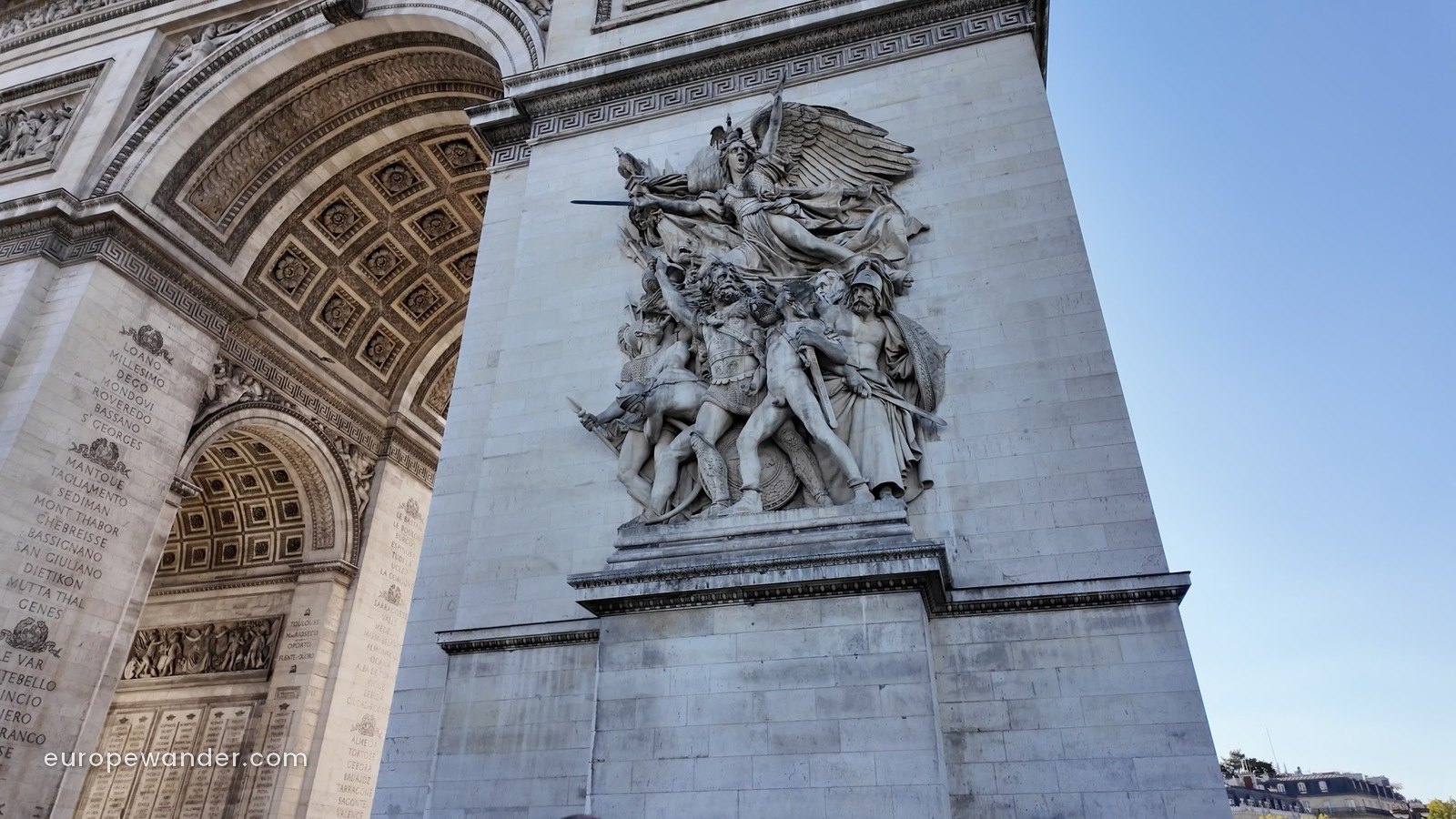
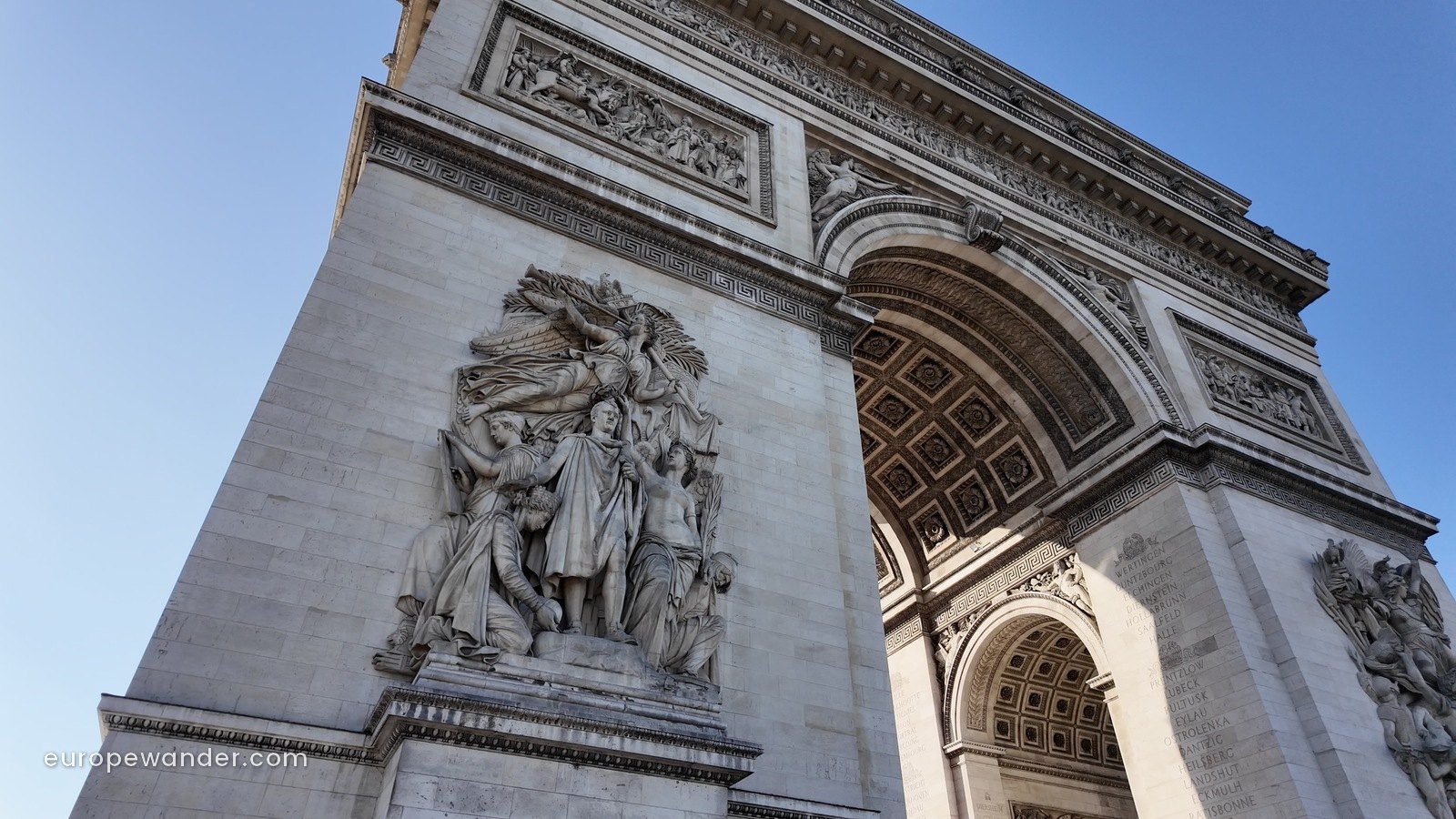
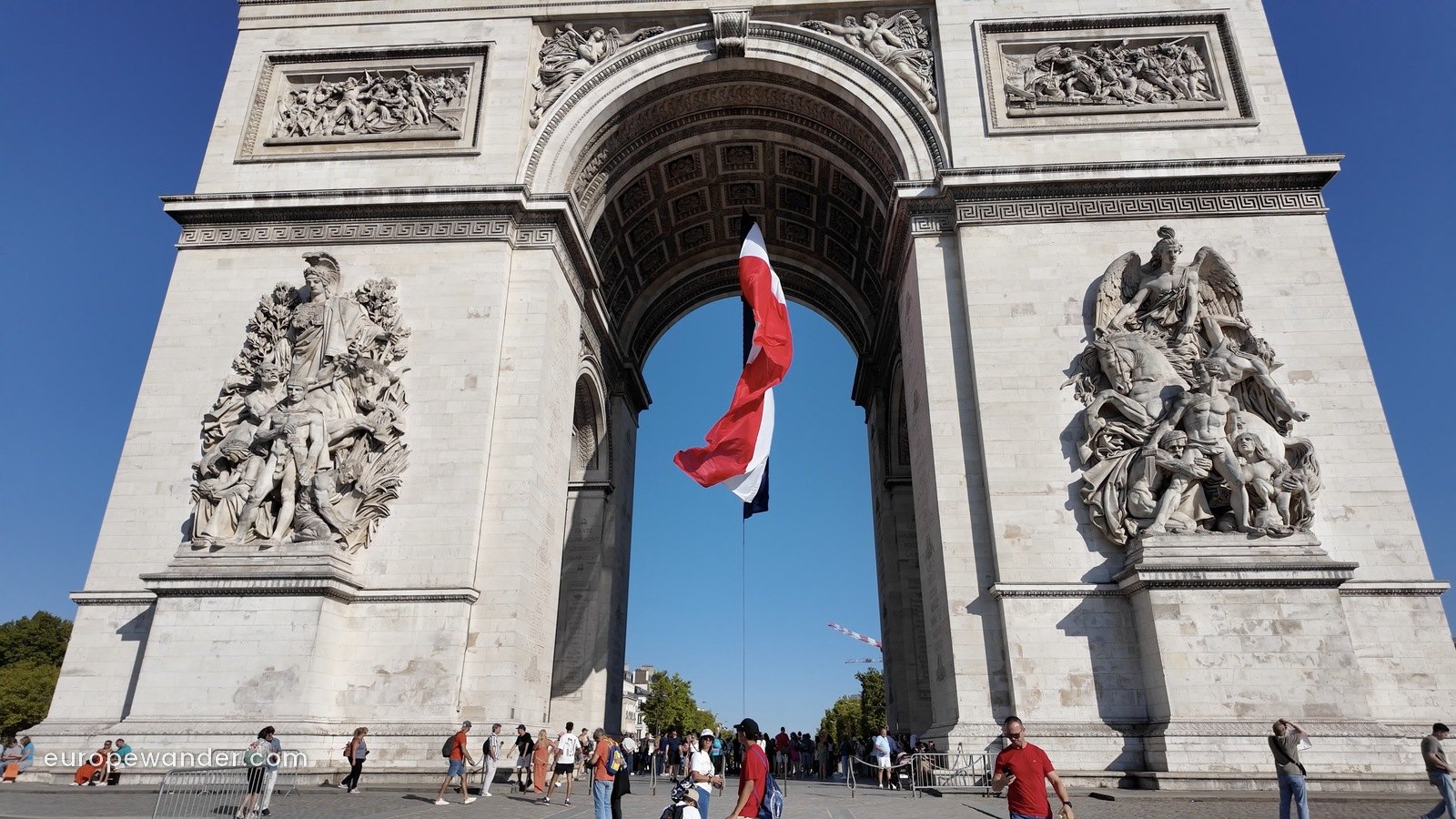
Inside are carved the names of 386 generals who served with Napoleon and 96 victories. Beneath the arch lies the Tomb of the Unknown Soldier from the First World War, standing for the 1.5 million French dead, with an eternal flame in front of it. On national holidays a French flag over ten metres long hangs from the vault.
From the top you see the Champs-Élysées, the Eiffel Tower, and away to the north-west the Grande Arche de la Défense among the towers of the business district — which you can also go up.
Back to the Paris travel guide to see how it fits into a half-day route.