

🇫🇷Musee d'Orsay Guide 2026: The Impressionists, Room by Artist
The world's densest collection of Impressionist and Post-Impressionist painting, in a converted 1900 railway station. Which Van Goghs and Monets are here, ticket prices, and whether the Thursday late opening is worth staying out for.
2026-08-22
The Musée d'Orsay is one of Paris's three major museums alongside the Louvre and the Pompidou. It covers painting and sculpture from 1848 to 1914, and holds the richest collection of Impressionist and Post-Impressionist work anywhere.
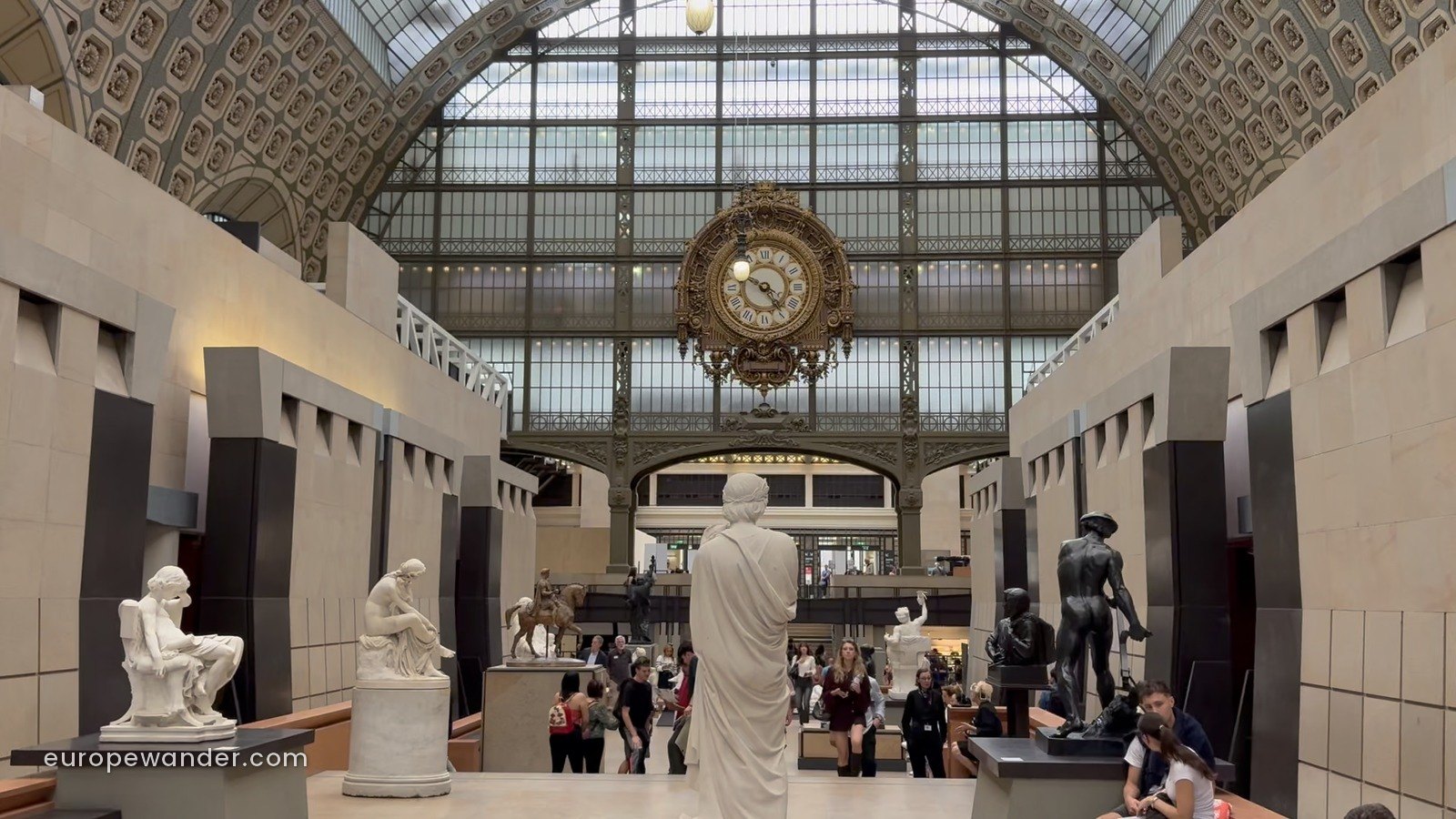
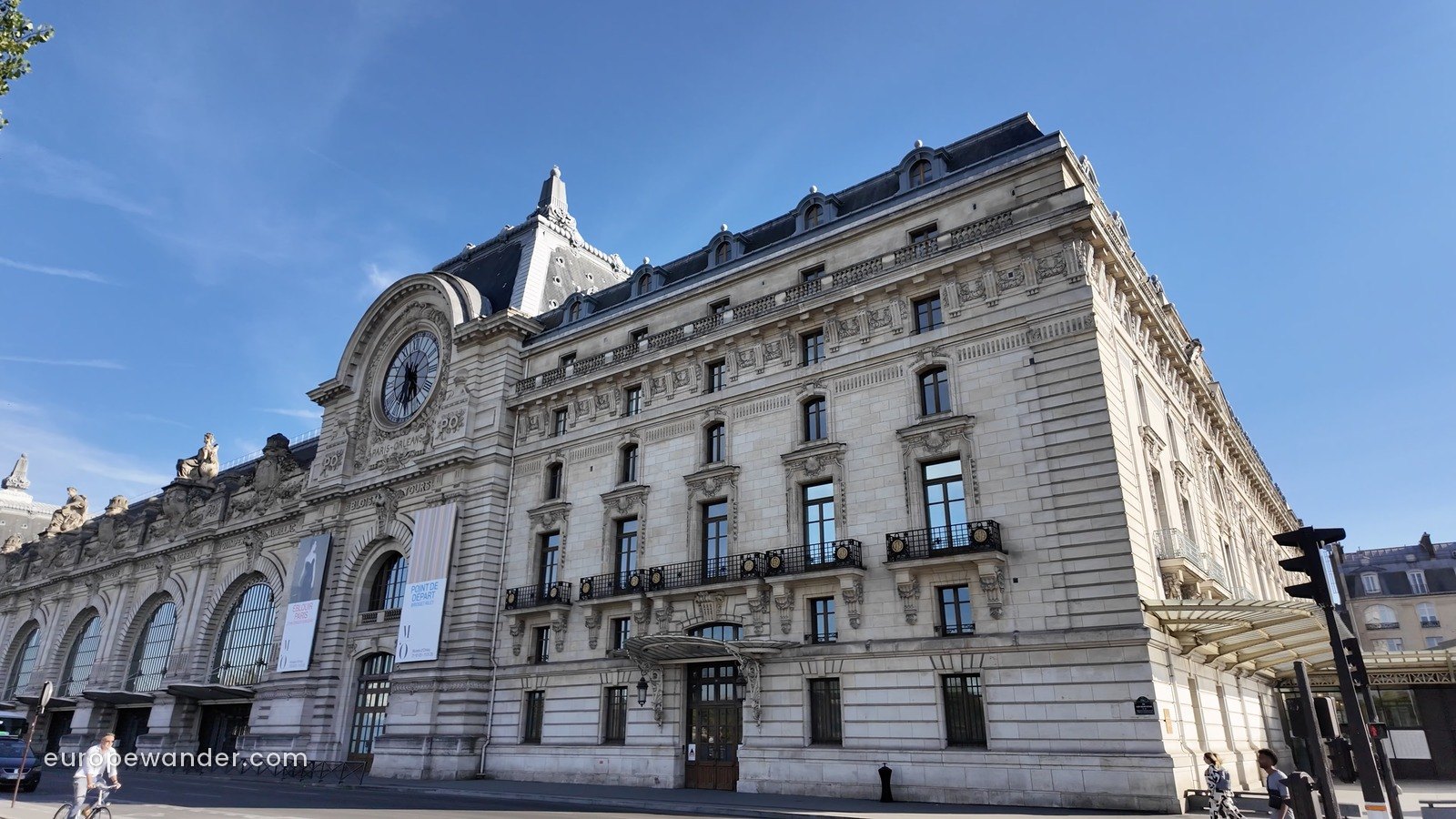
The building was the Gare d'Orsay, a railway station completed in 1900 and converted into a museum in 1986. The station clock is still in place.
Visitor information
Price: €16. Free under 18, and free for EU residents under 26 including students on a residence permit. It's €14 at the door, but booking online guarantees entry and cuts the queue.
Free days: the first Sunday of each month — reservation is compulsory.
Thursday late opening: 18:00–21:45, €12.
Hours: Tuesday–Sunday 9:30–18:00, Thursdays until 21:45.
Closed: Mondays, 1 May and 25 December.
Time needed: three to six hours.
Audio guide: €6 with a full-price ticket, €4 with a free one.
Musée d'Orsay skip-the-line ticket
GetYourGuide · from €16
This is an affiliate link — we may earn a commission at no extra cost to you.
Included in the Paris Museum Pass, and pass holders don't need to reserve — one of the easiest major museums to use the pass at.
Location: south bank of the Seine, directly across from the Tuileries, the Orangerie and the Louvre.
Metro: Solférino (line 12); RER C stops at Musée d'Orsay.
What to see, by artist
There are around 80 rooms, arranged by period and movement. These are the works people come looking for.
Van Gogh (24 in the collection): Self-Portrait, Starry Night Over the Rhône, Bedroom in Arles, The Church at Auvers.
Monet (over 80): Gare Saint-Lazare, Poppy Field, the Woman with a Parasol studies — the model is Camille, his first wife — and Camille on Her Deathbed, the last portrait he made of her before she died at 32.
Manet: Le Déjeuner sur l'herbe, a nude woman seated with two men in suits, generally read as the opening statement of Impressionism; Olympia, scandalous in its day for implying the sitter was a prostitute; and The Fifer.
Renoir: Bal du moulin de la Galette, The Swing.
Degas: The Dance Class.
Gauguin: Arearea, Tahitian Women on the Beach, and two self-portraits from different periods.
Cézanne: The Card Players, Apples and Oranges.
Millet: The Angelus, The Gleaners.
Seurat: The Circus.
One practical tip
The main hall still reads as a station concourse, and the clocks are original. Behind the clock face on the fifth floor is the museum's most popular photograph — a silhouette shot through the glass.
FAQ
Is the Thursday late opening worth staying out for?
If your days are already full, the €12 evening ticket is a good recovery option, and it's noticeably quieter than daytime.
Do Museum Pass holders need to book?
No. Tap the pass and walk in.
To chain it with the Louvre and the Orangerie into a museum day, see the Paris travel guide; for the Louvre itself, see the Louvre Museum guide.