

🇫🇷Paris Travel Guide 2026: How Many Days, Where to Stay, and Seven Half-Day Routes
How long you actually need in Paris, which arrondissements are worth staying in (and which to skip), and the city's sights broken into seven half-day routes you can mix and match.
2026-08-13
Three questions trip up almost every first-time visitor to Paris: how many days, where to stay, and how to order the sights so you're not criss-crossing the city. This guide answers all three, with the itinerary broken into seven half-day routes you can combine however you like.
How many days do you need?
Anything from three to seven days works. Five is the comfortable number if you want to see the headline sights without rushing. The city itself fits into seven half-day routes; Versailles sits outside the city and needs the better part of a separate day.
The headline sights, with realistic timings
| Sight | Time needed |
|---|---|
| Eiffel Tower | 1.5–2.5 hrs (with summit) |
| Arc de Triomphe | 2–3 hrs (with rooftop) |
| Notre-Dame | 30 min inside; tower climb booked separately |
| Louvre | 4 hrs minimum |
| Musée d'Orsay | 3 hrs minimum |
| Musée de l'Orangerie | 2 hrs (Monet's Water Lilies) |
| Sainte-Chapelle | 1 hr (the stained glass) |
| Palais Garnier | 2 hrs |
| Sacré-Cœur / Montmartre | half a day |
| Versailles | 6 hrs, outside the city |
Whether a pass saves you money depends on how many of these you'll actually do — see the Paris Museum Pass guide.
Where to stay
Paris is divided into 20 arrondissements, spiralling clockwise from the 1st in the centre. Weighing safety, transport and airport access, these are the areas worth shortlisting:
- Around the Louvre (1st / 2nd / 4th) — most central, most expensive. Close to the Louvre, the Pompidou and the Marais. Châtelet on the eastern edge of the 1st has RER B straight to Charles de Gaulle.
- Arc de Triomphe to Opéra (8th / 9th) — the shopping belt, next to the Champs-Élysées and the big department stores. The 9th has the Roissybus to CDG.
- Around the Eiffel Tower (7th / 15th / 16th) — where the tower-view hotels are, and pleasant riverside streets.
- Latin Quarter (5th) — the most atmospheric option and relatively kind on price. Saint-Michel Notre-Dame RER runs direct to the airport.
- Luxembourg to Les Invalides (6th / 7th east) — Left Bank character, a notch pricier than the Latin Quarter.
- Montparnasse (14th / 15th) — the best value of the lot, well connected and safe.
Paris city-centre hotels
Booking · from €110
Filter by the areas above — airport links and walking distances are noted in the listings
This is an affiliate link — we may earn a commission at no extra cost to you.
Areas to avoid staying in: the 10th, 18th, 19th and 20th have markedly higher violent-crime figures. The 10th contains the Gare du Nord and Gare de l'Est — if you arrive by train, hop straight on the métro to one of the areas above. The 18th is Montmartre: fine to visit in daylight, but not somewhere to linger after dark or book a hotel.
For the full breakdown by district, see Where to stay in Paris. For pickpocket hotspots and how the common scams work, read Is Paris safe?.
Airports and getting around
Charles de Gaulle (CDG) handles most long-haul flights; Orly (ORY) is smaller and mostly European. Both share one website, parisaeroport.fr. The dedicated airport coaches were discontinued in 2025.
- CDG to the centre: RER B, €14, 25–35 minutes, direct to Châtelet.
- Orly to the centre: Métro line 14, €14, 25 minutes to Châtelet.
In the city you'll use the Métro (inner Paris) and RER (the wider region, including the airports, Versailles and Disneyland). Since 2025 the whole Île-de-France region uses flat fares, so you no longer need to work out zones. The easiest way to buy is the official app — IDF Mobilités or Bonjour RATP — and tap your phone at the gate.
Seven half-day routes
Group the sights geographically and Paris falls into seven half-day loops. Mix them to taste — there's a museum one, a shopping one, and several that are pure walking.
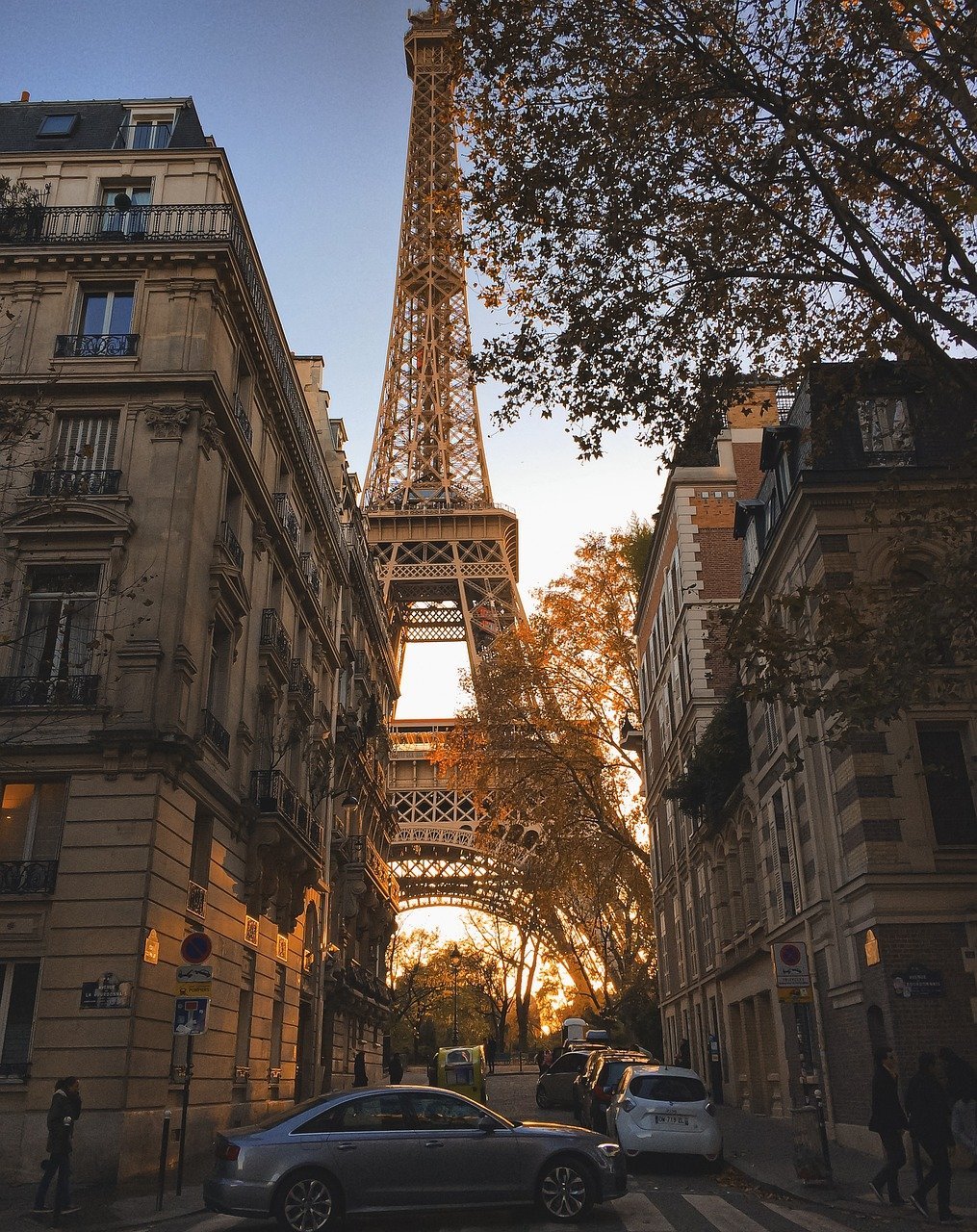
- Eiffel Tower — Palais de Chaillot viewpoint → Trocadéro Gardens → tower summit → Champ de Mars → Pont de Bir-Hakeim.
- Louvre / Orsay — both are long visits, so split them across two days and pair each with the Tuileries or the Orangerie.
- Arc de Triomphe & Champs-Élysées — walk up from Place de la Concorde (2.5 km, about 40 minutes) and climb the arch for the view down all twelve avenues.
- Palais Garnier & the department stores — two hours inside the opera house, then Galeries Lafayette and Printemps next door.
- Notre-Dame, Sainte-Chapelle & the Latin Quarter — the churches of the Île de la Cité, then Shakespeare and Company and the Left Bank cafés.
- The Marais — Place des Vosges, the boutiques on Rue des Rosiers, the Pompidou's exterior. A half day of wandering and eating.
- Montmartre & Sacré-Cœur — the hill, the basilica, the Wall of Love, Place du Tertre.
Harder to slot in but worth a dedicated trip: the Tour Montparnasse observation deck (the one view of Paris with the Eiffel Tower in it), Les Invalides, and the Musée Rodin.
Day trips
- Versailles — essential. Allow most of a day.
- Fontainebleau — a good counterpoint to Versailles: smaller, far fewer crowds.
- Mont-Saint-Michel — too far for a comfortable day trip; stay the night if you can.
- Disneyland Paris — entirely down to personal taste.
Paris attraction tickets
GetYourGuide · from €16
Louvre, Eiffel Tower and Arc de Triomphe can all be booked ahead
This is an affiliate link — we may earn a commission at no extra cost to you.