

🇫🇷Montmartre Guide: A Half-Day Walking Route from the Wall of Love to Sacré-Cœur
Montmartre in the order that actually makes sense on foot: nine stops from the funicular to the Moulin Rouge, what's free, what's worth paying for, and the safety caveat nobody mentions.
2026-08-13
Montmartre is a 130-metre hill in the 18th arrondissement, north of central Paris. Its two headline sights are the Basilique du Sacré-Cœur and the Wall of Love, but the reason to come is the neighbourhood itself: this is where Renoir painted the Moulin de la Galette, where Van Gogh lived with his brother, and where Amélie was filmed.
Time needed: half a day.
Getting there: métro line 2 to Anvers or Blanche, or line 12 to Abbesses.
A word on safety: pickpockets work this area heavily, especially around Sacré-Cœur. Keep your bag in front of you. We also don't recommend staying in the 18th — it's uneven at night, and the constant slopes make dragging luggage genuinely unpleasant.
The walking route
1. The Wall of Love (Le Mur des Je t'aime)
In a small park near Abbesses. Built in 2000 from 612 enamelled lava tiles, with "I love you" written 311 times in 250 languages. Free. Open from 8:00 on weekdays, 9:00 at weekends and on holidays.
2. The Montmartre funicular
Connects the bottom of the hill to Sacré-Cœur — 108 metres, 1.5 minutes, and a standard métro ticket (€2.55) covers it. The stairs are only 5–10 minutes if you'd rather walk.
3. La Halle Saint-Pierre
A bookshop-and-gallery arts centre at the foot of the hill. Free to look around, and a good stop before the climb.
4. Basilique du Sacré-Cœur
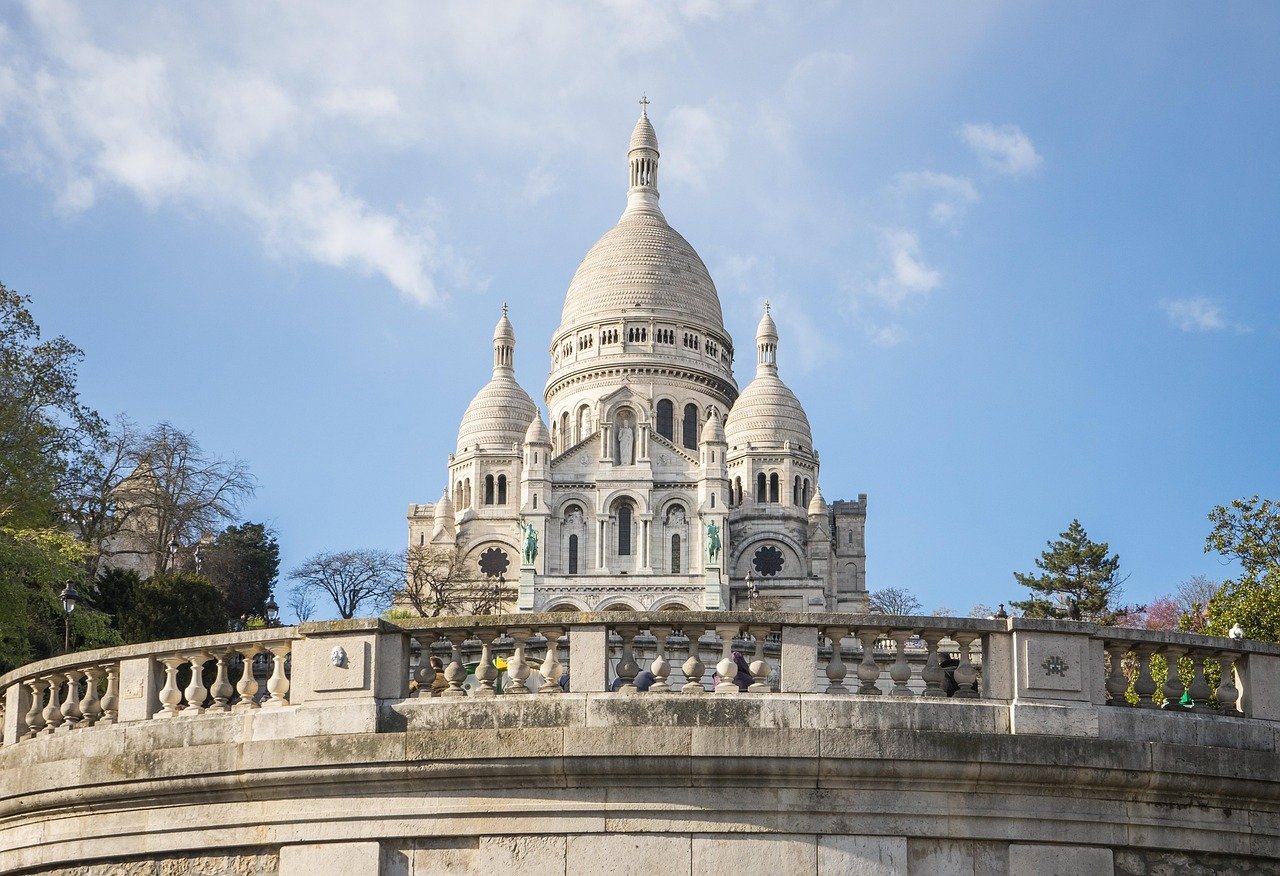
Built between 1875 and 1923. The terrace in front is one of the best free views over Paris. Interior free, open 6:30–22:30. Dome climb €8, 10:15–19:30, 280 steps and no lift. The mosaic of Christ inside the dome is among the largest in the world.
5. Place du Tertre
Picasso lived here once; today it's still full of artists working at easels. Touristy, but genuinely part of the neighbourhood's identity.
6. The pink house and the prettiest street
La Maison Rose, the pink restaurant everyone photographs. Head west from it onto Rue de l'Abreuvoir, widely considered Montmartre's most beautiful street.
7. Le Moulin de la Galette
The windmill and restaurant from Renoir's Bal du moulin de la Galette. Still a working French restaurant.
8. Café des Deux Moulins
Where Amélie worked in the film. Still an ordinary café, which is part of the charm.
9. Moulin Rouge
Opened in 1889, famous for the cancan, and still staging shows you can buy tickets for.
If you have more time
- Dalí Paris — €16, beside Place du Tertre
- Musée de Montmartre — €16, in a house where Renoir and others lived and worked
- Au Lapin Agile — the cabaret Picasso and his circle drank in
- Van Gogh's house — where he lived with his brother Theo from 1886 to 1888. Not open inside, but marked.
- Montmartre Cemetery — Foucault, Dumas fils and Zola are buried here
FAQ
Should I stay in Montmartre?
We'd say no. The 18th is patchy after dark and the hill makes luggage a chore. Visit in daylight and sleep elsewhere — see Where to stay in Paris.
Do I need to book the Sacré-Cœur dome climb?
No, buy at the door. But there's no lift and 280 steps, so if stairs are a problem, stick to the interior and the terrace — the view from the terrace is the one you've seen in photographs anyway.
Is the funicular worth it?
Only if you're tired or have a pushchair. The stairs take five to ten minutes and are part of the experience.
Back to the Paris travel guide to fit Montmartre into a full itinerary.