

🇮🇹3 Days in Rome 2026: A Day-by-Day Plan, With the Bookings You Must Make First
Rome splits neatly into three days: ancient Rome, the Vatican, and the baroque centre. Which two tickets you have to reserve in advance, the dress code that gets people turned away, and the hours to avoid at each stop.
2026-08-13
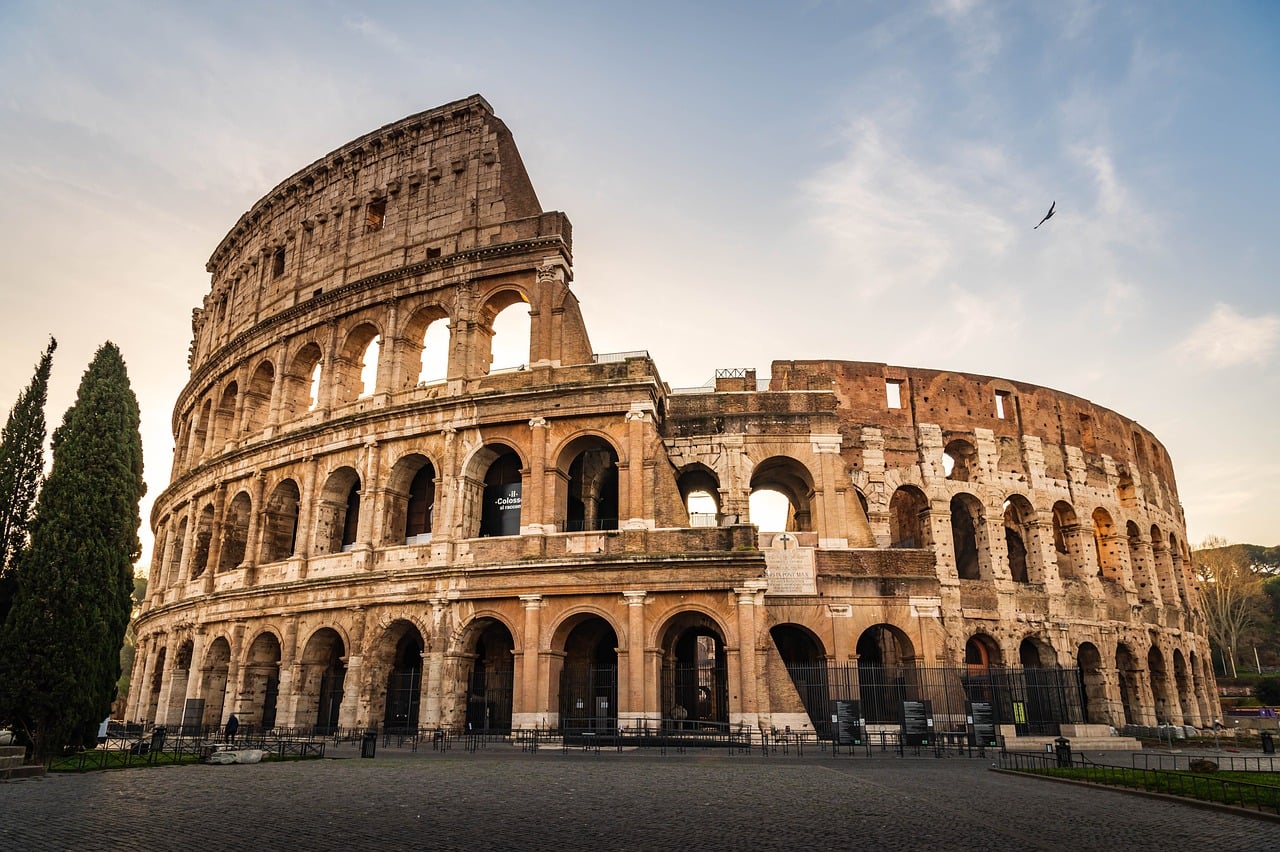
Rome divides itself naturally into three days: one for ancient Rome, one for the Vatican, one for the baroque centre. The three areas barely overlap geographically, so a day each keeps the walking sensible and stops everything blurring together.
Two things you must book before you leave
The Colosseum and the Vatican Museums both run on timed entry. Turning up to buy a ticket is effectively giving up.1. The Colosseum. Tickets are released 30 days ahead on the official site and you must pick a time slot. The standard ticket covers the Colosseum, the Roman Forum and the Palatine Hill and is valid for 24 hours. Access to the arena floor or the underground costs extra, is released separately, and goes faster.
2. The Vatican Museums. Timed slots on the official site. Closed on Sundays — the last Sunday of the month is free and correspondingly mobbed. On Wednesday mornings the papal audience makes St Peter's Square difficult to cross.
Is the Roma Pass worth it? The 72-hour version covers two sights plus unlimited public transport. It pays off on a combination like the Colosseum plus the Borghese Gallery — but it does not include the Vatican, which is a different country. Run the numbers in the Roma Pass guide.
Day 1: Ancient Rome
8:30–9:00 — the Colosseum
Take the earliest slot you can get. The south entrance, towards the Arch of Constantine, usually moves faster than the main one. There's no shade inside; in summer bring water and a hat.
The order matters: Colosseum first, then the Roman Forum on the same ticket, and finish by climbing the Palatine Hill. The top of the Palatine looks down over the whole forum and is the best viewpoint in the area — plenty of people run out of energy and skip it, which is a mistake.
Lunch — Monti
Ten minutes north of the Colosseum is Monti, one of the most characterful old quarters in the city. Half the price and twice the quality of the row of restaurants facing the Colosseum, which is a textbook tourist trap.
Afternoon — Piazza Venezia and the Capitoline
The white marble bulk of the Vittoriano is impossible to miss, and its rooftop terrace (paid lift) is the best panorama in Rome — the only place you can get the Colosseum and the forum in one frame.
Michelangelo's Piazza del Campidoglio is next door, and a lane off the side of the square gives you a free view over the entire Roman Forum.
Early evening — Mouth of Truth, then the Tiber
The queue for the Bocca della Verità is usually short if you fancy it. Otherwise walk back along the Tiber.
Day 2: The Vatican
8:00 — the Vatican Museums
Arrive for your slot. The route through is one-way and doubling back is difficult, so budget your time by room rather than expecting to circle round.
The Sistine Chapel comes last, at least 90 minutes in. No photography and no talking inside — the guards enforce both loudly.
One useful shortcut: there's a side door from the Sistine Chapel straight into St Peter's Basilica, which skips the security queue on St Peter's Square. Officially it's for tour groups; in practice nobody usually stops you. Worth trying — it can save an hour.
Midday — St Peter's Basilica
Free to enter, but there's a dress code: shoulders covered, nothing above the knee, men and women alike. A thin scarf in your bag solves it in summer. See the St Peter's Basilica guide for what to look for inside.
Climbing the dome is a separate ticket: 551 steps, or a lift to the middle level and 320 steps from there. The view earns the effort.
Afternoon — Castel Sant'Angelo
Ten minutes on foot from St Peter's Square along Via della Conciliazione. The rooftop terrace faces the Vatican and gives you the best angle on the basilica's dome.
Evening — Prati or Trastevere
Prati, just north-east of the Vatican, is a residential middle-class district with genuinely good-value restaurants. For somewhere livelier, cross the river to Trastevere, the centre of Rome's night-time eating and drinking.
Colosseum and Vatican tickets
GetYourGuide · from from €20
Both are timed entry — book three to four weeks ahead in high season. Guided versions usually include a separate fast-track entrance
This is an affiliate link — we may earn a commission at no extra cost to you.
Day 3: The baroque centre
Almost all on foot, and the easiest of the three days.
7:30 — the Trevi Fountain
This is the one stop in Rome that justifies an early alarm. After eight it's shoulder to shoulder and photographs are hopeless. At half seven it's nearly empty and the light is better. Note that entering the lower terrace now costs €2 — the square itself stays free.
Morning — the Pantheon
There's now an entry charge (around €5) and booking ahead on the official site is sensible. The oculus is the only light source, and the shaft of light is at its most dramatic on a clear morning. It's the best-preserved building of ancient Rome — two thousand years old and still original. Details in the Pantheon guide.
Midday — Piazza Navona
Bernini's Fountain of the Four Rivers sits in the middle; the fountains are worth a proper look. Restaurants on the square are priced accordingly — walk two streets west towards Campo de' Fiori, where there's a market at lunchtime and normal prices.
Afternoon — Spanish Steps to Piazza del Popolo
Sitting on the Spanish Steps is prohibited and police blow whistles at people who try, so don't. This is Rome's luxury shopping district, concentrated along Via dei Condotti.
Carry on north to Piazza del Popolo, and climb to the Pincio terrace on its eastern side — one of the classic sunset spots in Rome, looking over the square with St Peter's dome in the distance.
Optional add-on — the Borghese Gallery
In the Borghese gardens just north of Piazza del Popolo. Booking is compulsory, visits run in two-hour slots, and you leave when your slot ends. Bernini's Apollo and Daphne is here; see the Borghese Gallery guide before you book.
If you only have two days
Cut the second half of Day 3. Keep the early Trevi Fountain, the Pantheon and Piazza Navona, and fold them into the end of Day 1 or the afternoon of Day 2. Drop the Spanish Steps and the Borghese.
If you have four
Three sensible directions for the extra day:
- Pompeii and Naples — an hour to Naples by high-speed train, then a local connection to Pompeii. Doable as a day trip, but a long one
- Tivoli — Hadrian's Villa and the Villa d'Este, half an hour or so out, far fewer people
- More Rome — the Borghese Gallery, the Baths of Caracalla and the Appian Way, which suits a second visit
What catches people out
The cover charge (coperto) is normal — usually €2–3 a head, and it will be printed on the menu. But restaurants directly facing the Colosseum and the Trevi Fountain often add extras on top; check that prices are actually written down before you order.
Pickpockets concentrate in four places: the 64 bus between Termini and the Vatican, metro line A, the narrow lanes around the Trevi Fountain, and the security queue on St Peter's Square. Keep valuables in front of you on the 64 in particular.
The airport is a fixed fare. Fiumicino to anywhere in the historic centre is a flat €55 including luggage — a driver quoting anything else is wrong. See the Fiumicino guide.
Where to stay for this plan
Three days pointing in three directions means the historic centre — Monti, Navona, around the Pantheon — puts the most on foot.
Termini is the best-connected but you have to pick your side: west of the station towards Piazza della Repubblica is fine; the Esquilino side to the east is not recommended. Full breakdown in where to stay in Rome.
Hotels in Rome's historic centre
Booking · from from €120
Monti and the streets around the Pantheon suit this itinerary best — everything is walkable from there
This is an affiliate link — we may earn a commission at no extra cost to you.
FAQ
Is three days enough for Rome?
Enough for the essentials. Rome has about the highest density of history in Europe and a month wouldn't exhaust it, but three days covers the Colosseum, the Vatican and the baroque centre properly.
What changes if my trip includes a Sunday?
The Vatican Museums are closed on Sundays (free on the last Sunday of the month, and unbearable). If a Sunday falls in your three days, make it Day 1 or Day 3.
Can I do the Colosseum and the Vatican on the same day?
Technically yes, but don't. Each needs three hours or more and they're at opposite ends of the city; combining them leaves you too tired to enjoy either.
How much walking is this?
Days 1 and 3 come to roughly 15,000–20,000 steps. Day 2 is fewer steps but a lot of standing. Rome's cobbles — sampietrini — are harder on the feet than Paris, so comfortable shoes matter more than usual.
What about visiting in summer?
July and August regularly pass 35°C and the ancient sites have almost no shade. Push the outdoor sections before 9:00 and after 17:00, and put a museum or a hotel break in the middle of the day.
For the wider picture and more sights, see the Rome travel guide.
Prices and opening hours were accurate when this was written. Sights adjust booking rules and closing days — check the official site on the day before you go.