

🇮🇹Italy Travel Guide: How to Plan a First Trip, City by City
How to string Rome, Florence, Venice and Milan together, where the Cinque Terre and Pisa fit in, which tickets sell out, and the practical things worth knowing before you go.
2026-08-13
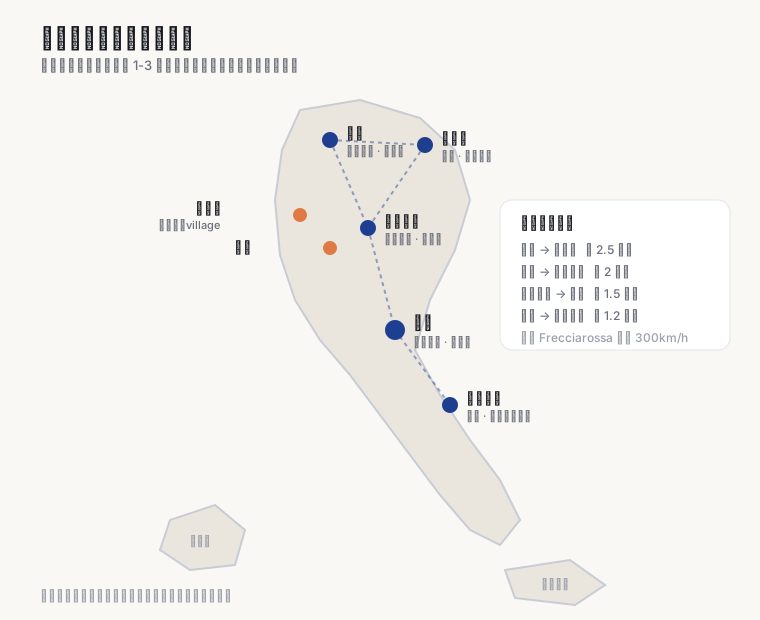
Italy packs more into a single country than almost anywhere else in Europe: Rome, Florence and Venice for history and art; the Cinque Terre, the Amalfi Coast and Capri for coastline; the Tuscan countryside, Lake Como and the Dolomites for landscape. Prices are noticeably friendlier than in France, Switzerland or the Nordics, and the food needs no introduction.
The classic first-trip route
Venice 2 days + Florence 2 days + Rome 3 days. This is the standard route for a reason — it runs north to south on a single fast rail line, and each city is genuinely different from the others. Add half a day to a day in Milan if you're connecting through there anyway.
Want longer? Bolt on the Cinque Terre (1 day), Pisa (an hour, on the way), and the Tuscan hill towns (3 days, best with a car).
Hotels across Italy
Booking · from from €90
Compare Rome, Florence, Venice and Milan in one search
This is an affiliate link — we may earn a commission at no extra cost to you.
The cities at a glance
Rome — the capital. The Colosseum and the Vatican Museums are the headline acts. Three days minimum.
Florence — birthplace of the Renaissance. The Duomo and the Uffizi are unmissable. Two days minimum.
Venice — the city itself is the sight. Two days minimum.
Milan — plenty of international flights, fewer conventional sights. Half a day to a day in passing, plus Lake Como as a day trip.
Cinque Terre — five coloured fishing villages strung along the Ligurian coast. One day.
Pisa — the Leaning Tower, and 30–40 minutes is genuinely enough. Easy to fold into a Florence–Cinque Terre journey.
Book these before you go
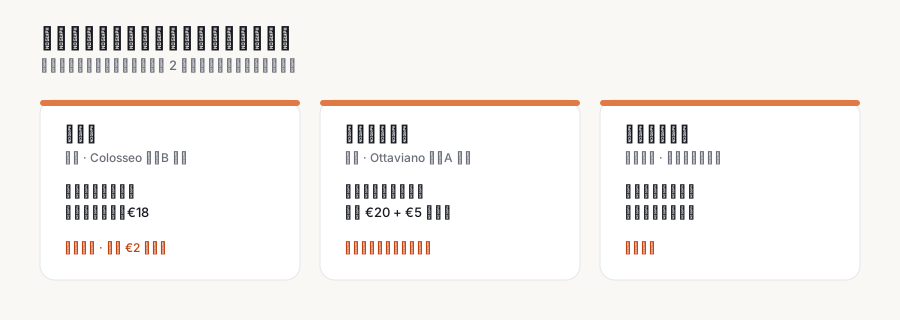
Long-distance train tickets between Milan, Venice, Florence and Rome get cheaper the earlier you book. Short regional hops have fixed fares, so there's no advantage to booking those ahead. A quick way to tell which is which: look up a random future date — if the price moves, book early; if it doesn't, buy at the station.
Attraction tickets sell out in high season. The ones that genuinely need advance booking:
- Rome: Vatican Museums (closed Sundays), Colosseum, Pantheon, Borghese Gallery (closed Mondays)
- Florence: Uffizi (closed Mondays), Accademia — where the David is (closed Mondays)
- Milan: The Last Supper — two to three months ahead, no exaggeration
Practical basics
Entry — most Western passports enter visa-free; see Schengen entry requirements for the EES and ETIAS situation.
Currency — the euro. Cards are accepted almost everywhere, but carry a little cash for small cafés and rural areas.
Tipping — not expected the way it is in North America. Many restaurants add a coperto (cover charge) per person; rounding up is plenty.
Water — tap water is safe, and public drinking fountains in Rome and Florence are free and cold. Bring a bottle.
Safety — Italy is generally safe, but pickpocketing is a real problem in crowded tourist areas and on transport, especially around Termini in Rome and on the vaporetti in Venice. Keep valuables split up and bags closed.
Timing — May–June and September–October are the best combination of weather and crowds. August is hot and many local businesses close for holidays.
Italy attraction tickets
GetYourGuide · from from €18
Colosseum, Vatican, Uffizi and Duomo tickets in one place
This is an affiliate link — we may earn a commission at no extra cost to you.