

🇫🇷4 Days in Paris 2026: A Day-by-Day Route, Booking Deadlines and a Wet-Weather Plan for Each Day
Four days grouped by neighbourhood so you walk less and backtrack never. The three things you have to reserve before you fly, which days each museum closes, and an indoor alternative for every afternoon.
2026-08-13
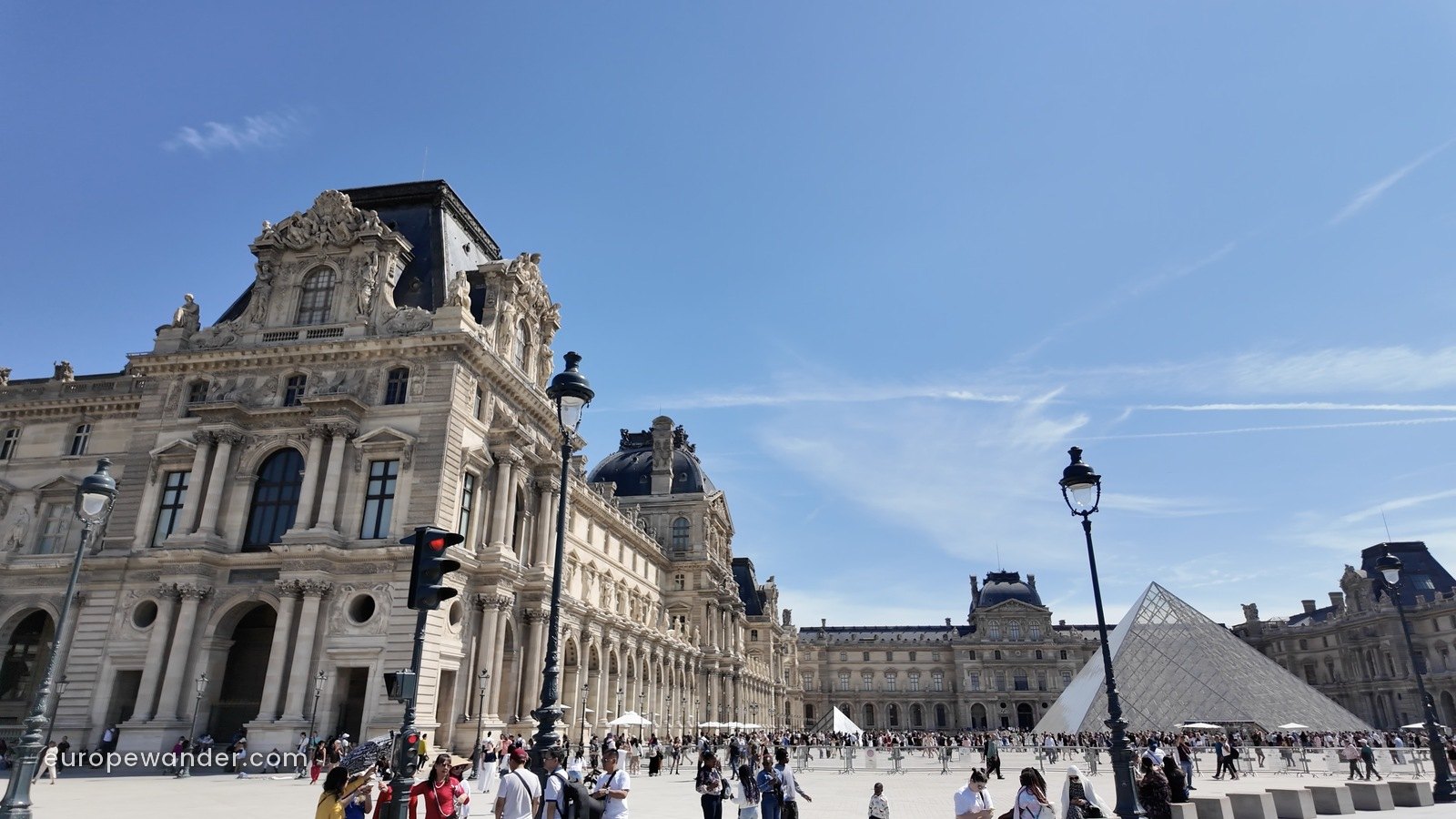
Four days is the sweet spot for Paris — long enough to cover the essentials and still spend one of them out of the city. The plan follows a single rule: each day stays inside one part of the city, which keeps metro changes and doubling back to a minimum.
Three things to book before you fly
Miss these and the itinerary falls apart.1. The Louvre. Timed slots on the official site, and you must choose one. The 9:00 opening slot is the thinnest crowd of the day. Closed Tuesdays.
2. The Eiffel Tower summit. Summit tickets go on sale around 60 days ahead and disappear quickly. If you only get the second floor, that's no loss — the second floor is actually the better level for photographing the city's texture.
3. Versailles. Timed entry again, and closed Mondays. Take the 9:00 slot, finish the palace before midday, and give the afternoon to the gardens.
Does the museum pass fit? Only if you're going into three or more paid museums across the four days. Note that it doesn't include reservations — the Louvre and Versailles still need their own timed slot on the official site. The arithmetic is in the Paris Museum Pass guide.
Day 1: Right Bank — the Louvre and the Concorde axis
9:00 — the Louvre
The pyramid entrance has the longest queue; use the Carrousel du Louvre entrance through the underground shopping centre instead, where security moves far faster. Three things everyone comes for — the Mona Lisa, the Winged Victory, the Venus de Milo — and they're spread across the Denon and Sully wings.
If you only have 90 minutes: go straight up to Denon on the first floor, see the three, and leave. Don't try to do the building. Route details in the Louvre guide.
Midday — the Tuileries
Walk straight out of the Louvre into the gardens and take one of the green chairs. There are kiosks inside, or head up to Rue Saint-Honoré for something better.
Afternoon — Concorde to the Champs-Élysées to the Arc de Triomphe
The whole axis is about 40 minutes on foot and there's something to look at the entire way. Go up the Arc de Triomphe — it's the only terrace in Paris where you see the Eiffel Tower and all twelve radiating avenues at once, and it photographs better than the tower itself. Use the underpass to reach it; never try to cross the roundabout. Prices and the climb are covered in the Arc de Triomphe guide.
Evening — the Musée d'Orsay, which stays open until 21:45 on Thursdays. If today is a Thursday this is a perfect close; otherwise move it to Day 3.
Day 2: Left Bank — the tower, Les Invalides and the Latin Quarter
Morning — the Eiffel Tower
Arrive for your slot. The best photograph isn't taken from underneath: the Trocadéro terrace faces the tower head-on with morning light behind you, which is the classic shot. The Champ de Mars works for the picnic-on-the-lawn angle. More in the Eiffel Tower guide.
Midday — Les Invalides and Napoleon's tomb
Fifteen minutes' walk from the tower. If military history isn't your thing, admire the gold dome from outside and give the time to the next stop instead.
Afternoon — Saint-Germain-des-Prés and the Luxembourg Gardens
The most pleasant stretch of the Left Bank. Café de Flore and Les Deux Magots are both here — sitting down at one is an experience rather than a meal, and knowing that in advance saves disappointment. The Jardin du Luxembourg is the park Parisians themselves use.
Evening — dinner in the Latin Quarter
Shakespeare and Company is in this area and stays open late. Avoid the lanes directly opposite Place Saint-Michel — they're wall-to-wall tourist pricing. Two blocks south and it normalises.
Eiffel Tower and Louvre tickets
GetYourGuide · from from €30
Book summit and timed tickets four to eight weeks out — in high season there's essentially nothing left on the day
This is an affiliate link — we may earn a commission at no extra cost to you.
Day 3: Île de la Cité and Montmartre
Morning — Île de la Cité
Sainte-Chapelle is the reason to come: fifteen metres of stained glass, and on a clear morning the light through it is unlike anything else in the city. Notre-Dame next door has reopened — free to enter but with a queue, and booking a slot on the official site saves a lot of standing. See the Notre-Dame guide.
Midday — Le Marais
One bridge from the island. The streets around Place des Vosges are the best browsing in Paris, and falafel is the local fast food. Much of the quarter trades normally on Sundays, which makes it one of the few genuinely busy parts of Paris that day.
Afternoon — the Musée d'Orsay (if you skipped it on Day 1)
The home of Impressionism — Van Gogh, Monet and Renoir are all on the fifth floor. Closed Mondays. What to look for: the Musée d'Orsay guide.
Evening — Montmartre
Save it for sunset. The steps below Sacré-Cœur are one of the best sunset perches in Paris. Two things to watch: on the stretch between the metro and the steps, men will try to tie a friendship bracelet onto your wrist — don't put your hand out; and the portrait artists on Place du Tertre draw first and name a price after, so don't stop unless you want one. Details in the Montmartre guide.
Day 4: Versailles
Getting there: RER line C direct to Versailles Château Rive Gauche, about 40 minutes.
Take the 9:00 slot. The Hall of Mirrors is shoulder-to-shoulder after ten, and an early entry is the only way round it.
Gardens after midday. They're free except on fountain-show days, and they're enormous. Rent a bike or take the little train out to the Grand Trianon and Marie-Antoinette's hamlet — far fewer people out there, and it's the most relaxed part of the estate.
The Musical Fountains Show runs on selected dates, usually weekends and some Tuesdays, and the gardens are ticketed on those days. Come specially if you want it; avoid those dates if you'd rather not pay. Full breakdown in the Versailles guide.
Head back around 16:00–17:00 and keep the evening for a Seine cruise or last shopping.
If you only have three days
Drop Versailles, or use it in place of Day 3. It's Versailles or Montmartre, not both — each wants half a day or more and cramming them together ruins the pace.
If you have five
Three directions for the extra day: Giverny and Monet's garden (open April to October, essential for Impressionism enthusiasts), Fontainebleau (far quieter than Versailles — see the Fontainebleau guide), or Mont-Saint-Michel, which is punishing as a day trip and much better with a night there.
A wet-weather plan for each day
Paris rain arrives without warning. Have one indoor swap ready per day:
- Day 1 → the Louvre is indoors anyway; replace the Champs-Élysées walk with the Musée d'Orsay
- Day 2 → high wind closes the tower's upper levels; switch to the Orangerie and Monet's Water Lilies rooms
- Day 3 → no Montmartre sunset; go to the Pompidou or the Palais Garnier instead
- Day 4 → the palace runs normally, the gardens are miserable in rain; cut the outdoor half and return early
Transport and where to stay
Tickets: for four days a Navigo Easy card loaded with a carnet of ten usually beats day passes, unless you're making five or six journeys daily. Airport transfers and RER zones are priced separately — comparison in the Paris metro guide.
Where to stay: this itinerary crosses both banks, so anywhere in the 1st to 6th arrondissements within reach of metro line 1 or 4 keeps everything simple. Neighbourhood-by-neighbourhood in where to stay in Paris.
Hotels in central Paris
Booking · from from €130
Aim for the 1st-6th arrondissements with a metro stop within five minutes; Le Marais and the Left Bank suit this plan best
This is an affiliate link — we may earn a commission at no extra cost to you.
FAQ
Is four days enough for Paris?
Enough for the core. You could spend two weeks here, but four days covers the Louvre, the Orsay, the tower, the Arc de Triomphe, Sainte-Chapelle, Montmartre and Versailles — which is what most people mean by "Paris".
What if my trip includes a Monday?
The Louvre closes Tuesdays; the Orsay and Versailles close Mondays. If a Monday falls in your four days, make it the Montmartre, Marais and Sainte-Chapelle combination, none of which is affected.
How much walking is this?
15,000 to 20,000 steps a day. There's a lot of cobble, so wear shoes you've already broken in — the first day in Paris is the wrong time for new ones.
How does this change with children?
Cut one sight from each day and go back to the hotel for two hours after lunch. Both the Louvre and Versailles are long for children; half of each is fine. The Tuileries and the Luxembourg Gardens both have playgrounds and carousels.
Where do I need to watch my bag?
Metro line 1, the area around the Eiffel Tower, the Montmartre steps and the mainline stations are the four hotspots. Details in the Paris pickpocket guide.
For the wider picture and more sights, see the Paris travel guide.
Prices and opening hours were accurate when this was written. Museums adjust closing days and booking rules — check the official site on the day before you go.